

Born free.
自由に生まれて says born free, the English title of the 1966 film and its Academy Award-winning song, in plain Japanese. Worn as a tattoo, it says your freedom was yours from the start.
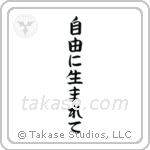
Born Free
自由に生まれて
jiyū ni umarete
Vertical Block VB6C
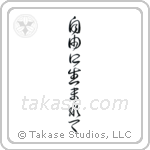
Born Free
自由に生まれて
jiyū ni umarete
Vertical Cursive VC6B
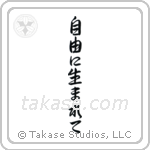
Born Free
自由に生まれて
jiyū ni umarete
Vertical Semi-Cursive VS6C
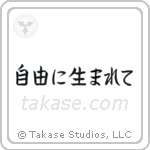
Born Free
自由に生まれて
jiyū ni umarete
Horizontal Block HB5A
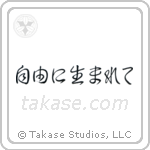
Born Free
自由に生まれて
jiyū ni umarete
Horizontal Cursive HC5A
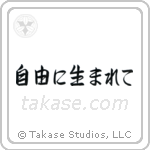
Born Free
自由に生まれて
jiyū ni umarete
Horizontal Semi-Cursive HS5A
