

最愛 (saiai): beloved, the one you love most, and the love itself.
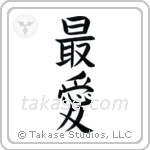
Beloved
最愛
saiai
Vertical Block VB2C
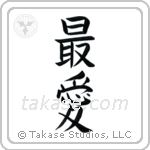
Beloved
最愛
saiai
Vertical Block VB3A
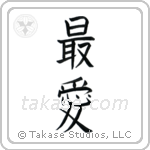
Beloved
最愛
saiai
Vertical Block VB3B
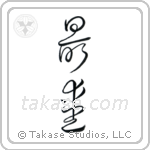
Beloved
最愛
saiai
Vertical Cursive VC3A
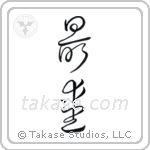
Beloved
最愛
saiai
Vertical Cursive VC3B
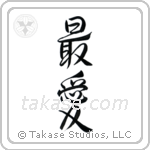
Beloved
最愛
saiai
Vertical Jiun VD3A
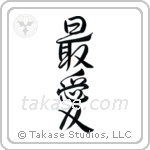
Beloved
最愛
saiai
Vertical Jiun VD3B
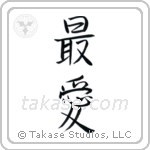
Beloved
最愛
saiai
Vertical Semi-Cursive VS2C
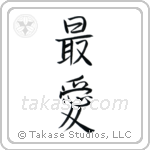
Beloved
最愛
saiai
Vertical Semi-Cursive VS3A
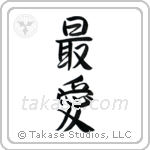
Beloved
最愛
saiai
Vertical Semi-Cursive VS3B
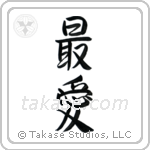
Beloved
最愛
saiai
Vertical Semi-Cursive VS3C
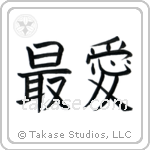
Beloved
最愛
saiai
Horizontal Block HB2A
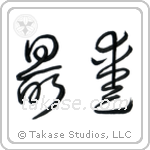
Beloved
最愛
saiai
Horizontal Cursive HC1A
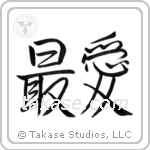
Beloved
最愛
saiai
Horizontal Semi-Cursive HS2A