

The mind of a beginning: the first resolve, the first stirring toward awakening, the state of one new to an art, and plain inexperience.
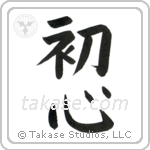
Beginner's Mind
初心
shoshin
Vertical Block VB2C
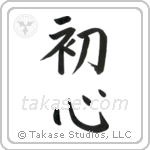
Beginner's Mind
初心
shoshin
Vertical Block VB2D

Beginner's Mind
初心
shoshin
Vertical Cursive VC2B

Beginner's Mind
初心
shoshin
Vertical Jiun VD2B

Beginner's Mind
初心
shoshin
Vertical Jiun VD2C
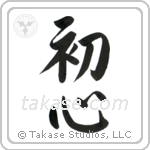
Beginner's Mind
初心
shoshin
Vertical Semi-Cursive VS2C

Beginner's Mind
初心
shoshin
Vertical Semi-Cursive VS2D

Beginner's Mind
初心
shoshin
Horizontal Block HB3A

Beginner's Mind
初心
shoshin
Horizontal Cursive HC3A

Beginner's Mind
初心
shoshin
Horizontal Jiun HD2A

Beginner's Mind
初心
shoshin
Horizontal Jiun HD3A
