初心 shoshin Beginner's Mind
初心 is followed from a Chinese sutra of about 404 through Japanese writing into English, as novice in 1867 and beginner's mind in 1967.

Abstract
初心, shoshin, is the mind of a beginning: the resolve one first formed, the first stirring of the mind that seeks awakening, the state of one who has just begun an art, and plain inexperience. The word is in a Chinese sutra translated in the early fifth century, as the first of the minds through which awakening is reached, and the Japanese dictionaries attest its senses in Japanese writing between the eleventh century and the sixteenth, the learner's state before the Buddhist sense. Its best-known use is Zeami's maxim that the beginner's mind must not be forgotten, and Dōgen had already made the beginner's practice the whole of realization. In English the earliest rendering known to this study is a dictionary's novice, in 1867; beginner's mind is in print from 1967, as the name of Suzuki Shunryū's talks to a Zen Center group, three years before his book.
Overview
The sense. A general word of the written language, with one Buddhist sense among four. The 精選版 日本国語大辞典 gives them in this order: 初めに思いたった心。最初の決心, the mind first set on something, the first resolve, with its first example in the 本朝文粋 of about 1060; short for 初発心, 初めて悟りを求める心を起こすこと。仏道にはいったばかりのこと, first raising the mind that seeks awakening; having just entered the Buddhist path, with the 法華義疏, a commentary on the Lotus Sutra of the early seventh century, named in brackets without a quotation, apart from its examples, and its first Japanese example in the 正法眼蔵随聞記 of 1235 to 1238; 学問・芸能の道にはいったばかりであること, having just entered the path of learning or of an art, first in the 無名抄 of about 1211 and then in Zeami's 風姿花伝; and 世なれていないこと … 未熟。うぶ, unworldly, unripe, green, first in a tea diary of 1569 [1]. The numbering is not an order of age: the learner's state is attested before the Buddhist sense's first example in Japanese. デジタル大辞泉 gives the same four in another order and opens on the first resolve, 最初に思い立ったときの純真な気持ち, the pure feeling of the moment one first set one's mind on something, with the phrases 初心を貫く, to hold to one's first resolve, and 初心に返る, to return to it [1]. The English beginner's mind covers the learner's state and, through Zen, the Buddhist sense; for the first resolve English says first purpose or original intention, and Japanese has a nearer word, 初志, which 大辞泉 gives beside it [1].
The words. 初, first, beginning, and 心, heart, mind. The 字通 gives the compound one sense, 本意, the original intent [1]. Read shoshin, both characters in their Chinese readings.
The text in English. The bilingual dictionaries render the learner first. Hepburn in 1867: SHO-SHIN … (hajime no kokoro). A novice, or beginner in anything, inexperienced, with the gloss hajime no kokoro, the mind of the beginning [2]. Brinkley in 1896: One who has just begun to study anything; beginner; novice [3]. Kenkyusha's dictionary of 1931: uninitiated; inexperienced; untrained; inexpert; green; raw [4]. Nelson's character dictionary, in its revised edition of 1974, gives the first resolve, original aim, original intention [5]. JMdict today gives one's original intention, one's initial enthusiasm and inexperience, naivety, greenness [6]. None of these dictionaries writes beginner's mind; the phrase came into English from a teacher, and its history is below.
The historical record
Early fifth century. 摩訶般若波羅蜜經, the Great Perfection of Wisdom Sutra, translated by Kumārajīva 鳩摩羅什. Subhūti puts a question to the Buddha: 菩薩摩訶薩用初心得阿耨多羅三藐三菩提?用後心得阿耨多羅三藐三菩提?世尊!是初心不至後心,後心不在初心, does the bodhisattva attain supreme awakening with the first mind, or with the later mind? The first mind does not reach the later mind, and the later mind is not in the first. The Buddha answers with a lamp: neither the first flame nor the later one burns the wick, and yet the wick is burned; so the bodhisattva 不用初心得阿耨多羅三藐三菩提,亦不離初心得, does not attain supreme awakening by the first mind, nor apart from the first mind, and so with the later [7]. 大智度論, the commentary on this sutra from the same translator, glosses the answer: 若但以初心得、不以後心者,菩薩初發心,便應是佛;若無初心,云何有第二、第三心, if it were attained by the first mind alone and not the later, the bodhisattva would be a buddha the moment he first raised the mind; and without a first mind, how would there be a second and a third? [8]. Here 初心 is the first in a series of minds, and the commentary ties it to the bodhisattva's first raising of the mind, 初發心, the term the Japanese dictionaries give for their Buddhist sense.
317 to 420, as the CBETA catalogue dates it; translator unknown. 佛說因緣僧護經, a sutra in Chinese. The 日国 lists this sutra under its Buddhist sense; the line uses the word of lay donors: 檀越初心,造寺之時,要打犍稚,作曠濟意, the donors' first intent, when they built the temple, was that the gong be struck, meaning to feed all comers [9][1]. The first resolve, in a sutra.
About 1060. 本朝文粋, a dedication Ōe no Masahira 大江匡衡 wrote for the Minister of the Left, Fujiwara no Michinaga 藤原道長, at his temple 浄妙寺. 自長保六年三月一日、結華構償初心, as the 日国 quotes it with its reading marks, from the first day of the third month of 1004 we raised the hall of flowers and fulfilled the first resolve [1]. The voice is Michinaga's: as a young man he had vowed to build a temple at the family graves at Kohata, and he built it as Minister of the Left in 1005 [10]. The first resolve, a vow made and kept.
About 1211. 無名抄, Kamo no Chōmei 鴨長明's notes on poetry. 俊恵はこのころもただ初心のごとく哥を案じ侍り, Shun'e, even now, ponders his poems just as a beginner would [1]. The learner's state, praised in a master.
1231. Dōgen 道元, 弁道話, On the Endeavor of the Way. 佛法ニハ修證コレ一等ナリ、イマモ證上ノ修ナルユヱニ、初心ノ辦道、スナハチ本證ノ全體ナリ, in the buddha dharma practice and realization are one; because practice now is practice within realization, the beginner's endeavor of the way is itself the whole of original realization, as the 1885 typeset prints it [11]; Tanahashi's 2010 rendering, below, dates the work 1231 [12]. The beginner's practice, praised as the whole of awakening.
1235 to 1238. 正法眼蔵随聞記, Dōgen 道元's sayings as his disciple recorded them. 或は初心未入の人意得べからずとて, or, saying that a beginner not yet entered cannot grasp it [1]. The beginner on the Buddhist path. Okumura Shōhaku 奥村正博's 2022 translation of the book renders another talk When you have the mind of a beginner, whether you have aroused the mind of awakening or not, you should thoroughly read and study the sacred scriptures, where the beginner and the first raising of the mind are two things, and notes that in this book Dōgen uses the word as a plain synonym for beginner, without the positive valence it has in English today [13].
About 1400 to 1402, and 1424. Zeami 世阿弥. In the 風姿花伝 the word names a young actor's first season, この比の花こそ、しょ心と申す比なるを, this is the season's flower, the season called the beginner's [1]. In 1424 he closed his treatise 花鏡 with the maxim his school held good in every art, 初心不レ可レ忘, the beginner's mind must not be forgotten, and gave it three parts: the beginner's mind of right and wrong, which he glosses as 若年の初心, the beginner's state of one's youth, the beginner's mind of each stage, and that of old age [14]. The maxim has its own history on this site; its point for the word is that Zeami made 初心 a state renewed at every stage of a life, not only the first.
1569. 宗及茶湯日記, the tea diary of Tsuda Sōkyū 津田宗及. Of a tea jar: 何ともなくよき壺なり … 初心なるこころはなし, a good jar, nothing affected about it … there is nothing green in it [1]. Unripe, green, in the taste of tea.
Takuan Sōhō 沢庵宗彭 (1573–1646), 不動智神妙録, printed in 1884. Writing for a swordsman, the Zen master has the student set out 初心の住地より能修行して不動智の位にいたれば立かへつて元の住地の初心の位ひへ落る, from the abode of the beginner's mind train well until you reach the rank of immovable wisdom, and then you turn back and fall again to the beginner's rank, the abode you set out from [15]. The learner's state as the end of training as well as its start.
1854, in print 1893. Sakuma Shōzan 佐久間象山 (1811–1864) to his pupil Yoshida Shōin 吉田松陰 (1830–1859), from prison. 栄辱に因りて初心に負く勿れ, do not let honor or shame turn you from your first purpose, and Shōin's answer, 寧んぞ栄辱に因りて初心に負かんや, how could I let honor or shame turn me from my first purpose?, as Tokutomi Sohō 徳富蘇峰 (1863–1957) prints them in his life of Shōin [16]. Both were jailed in Edo in 1854 over Shōin's failed attempt to sail abroad [17][18]. The first resolve, a life's.
What is not a source. The maxim 初心忘る可からず is the word's most famous use, not its origin; the word is centuries older than Zeami. 初心者, a beginner, is the person, not the state of mind.
The word in English
1917. Horace E. Coleman, translating Tokutomi's life of Shōin, Transactions of the Asiatic Society of Japan. Dōshi no shi Eijoku ni yotte, shoshin ni somuku nakare, Don't let honor or shame turn you aside from your first purpose [17]. The first resolve in English, as first purpose.
Fall 1967. Wind Bell, the magazine of the Zen Center of San Francisco, volume 6, numbers 2 to 4. The issue reports that Suzuki Shunryū lectured to the Zen Center's Los Altos branch every Thursday, in a zendo built in Marian Derby's garage, and that she …collected his Thursday lectures on tape and tentatively entitles them Beginner's Mind because Suzuki Roshi started by giving them as short lectures for beginners; elsewhere in the issue, …your beginner's mind always, that is, to resume our original or inmost mind. In the beginner's mind there are many possibilities; in the expert's mind there are few [19]. These are the talks that Baker's introduction to the 1970 book says Marian Derby taped and made its first draft from, and the last sentence is the book's [20]. The words are read here as excerpts. Beginner's mind as a teaching, and the book's own sentence, in print three years before the book.
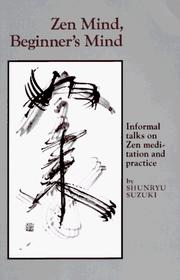
1970. Suzuki Shunryū 鈴木俊隆 (1905–1971), Zen Mind, Beginner's Mind, Weatherhill. The prologue: In Japan we have the phrase shoshin, which means "beginner's mind." The goal of practice is always to keep our beginner's mind; You might easily lose your original attitude towards it; and If your mind is empty, it is always ready for anything; it is open to everything. In the beginner's mind there are many possibilities; in the expert's mind there are few. Richard Baker's introduction says Suzuki stayed in America because Americans have a beginner's mind, that they have few preconceptions about Zen, gives the word to Dōgen, Beginner's mind was a favorite expression of Dogen-zenji's, and reads the frontispiece calligraphy as shoshin, or beginner's mind [20]. The book does not name Zeami. Its prologue keeps the first attitude, which is 大辞泉's 初心に返る, and adds a sense none of the Japanese dictionaries gives in those words: openness, a mind empty of what it already knows.
1985 to 2022. Dōgen's translators. Tanahashi Kazuaki 棚橋一晃 renders arouse true beginner's mind in the 学道用心集 in 1985 [21], and the practice of beginner's mind is itself the entire original realization in the 弁道話 in 2010 [12]; Nishijima Gudō Wafu 西嶋愚道和夫 (1919–2014) and Chodo Cross note that "Beginner" is shoshin, lit., "beginning mind" or "beginner's mind," and is the usual term for a beginner himself or herself [22]; and Okumura Shōhaku 奥村正博, translating the 正法眼蔵随聞記 in 2022, notes that the phrase is the one Suzuki's title carries and that Dōgen, however, simply uses this expression synonymously with "beginner" without the same positive valence [13].
1993 to 2013. The martial books. Yamaoka Tesshū 山岡鉄舟 (1836–1888)'s writing of July 1882 that John Stevens's 1994 translation heads Return to Beginner's Mind and opens If the marvels of swordsmanship elude you, return to beginner's mind, its Japanese not seen here [23]; Saotome Mitsugi 五月女貢, in 1993, after Suzuki's book, recalling the order Ueshiba Morihei 植芝盛平 (1883–1969) gave students from other schools, You must have shoshin, a beginner's mind, a mind of pure white paper [24]; Takuan's sentence above in Thomas Cleary's 2005 rendering, you must return to the state of the beginner, with Cleary's comment that the state of the beginner here refers to innocence, not ineptness [25]; and Stevens's 2013 life of Kanō Jigorō 嘉納治五郎 (1860–1938), where the white belt of the twelfth dan marks that a master of that rank had come full circle, returning to "beginner's mind" [26].
Today. JMdict gives one's original intention and inexperience and not beginner's mind [6]. The house title, Beginner's Mind, is Suzuki's English; word for word 初心 is the first mind, and it carries the first resolve and plain greenness as well as the learner's openness.
A reading
初心 is a word about where a thing starts, and the four senses are four places to stand at a start: the vow, the first stirring toward awakening, the first season of an art, and the greenness that has not yet learned the world. The first three can be praise and the fourth is not, and the dictionaries keep all four side by side. English took the word twice, first as the learner, a novice, in the bilingual dictionaries, and then as a teaching, from a Zen teacher in California, whose sense is a mind empty enough to see freshly. That sense is a real reading of the word, and Dōgen had praised the beginner's practice seven centuries before it; Zeami's three, and the sutra's first mind in a series, are older readings of the same two characters. A person who hangs 初心 hangs all of them.
Notes
Baker's 1970 introduction gives beginner's mind to Dōgen. The 日国 attests the word in Dōgen's 正法眼蔵随聞記, and Okumura's 2022 note on a talk in that book says Dōgen uses it there as a plain synonym for beginner, without the positive valence; the 弁道話, though, makes the beginner's endeavor the whole of original realization. Baker's attribution holds for Dōgen's praise of the beginner's practice; the openness of the English phrase is Suzuki's teaching [1][20][13][11].
Japanese Scrolls by Master Calligrapher Eri Takase
Sources not seen
Wind Bell, volumes 1 to 5, 1961 to 1966, and the fall 1967 issue beyond its excerpts. The magazine of the Zen Center of San Francisco; the fall 1967 issue is a lending copy at the Internet Archive (identifier zenmountaincente0000vari), and the earlier volumes are not there. They would say whether Suzuki's talks were called beginner's mind in print before 1967.
A reader with access to any of these is invited to write to Takase Studios at Tim@Takase.com.
References
- 「初心」, デジタル大辞泉 · 精選版 日本国語大辞典 · 普及版 字通, at kotobank. https://kotobank.jp/word/初心-534695
- J. C. Hepburn, A Japanese and English Dictionary; with an English and Japanese Index, American Presbyterian Mission Press, Shanghai, 1867, s.v. SHO-SHIN. archive.org identifier ajapaneseandeng00hepbgoog. https://archive.org/details/ajapaneseandeng00hepbgoog
- F. Brinkley, Nanjō Fumio and Iwasaki Yukichika, An Unabridged Japanese-English Dictionary, Sanseidō, 1896, s.v. Shoshin.
- Takenobu Yoshitarō, general editor, Kenkyusha's New Japanese-English Dictionary, second edition, 1931; American edition, Harvard University Press, 1942, s.v. shoshin.
- Andrew N. Nelson, The Modern Reader's Japanese-English Character Dictionary, second revised edition, Tuttle, 1974, s.v. 初, the compound 初心.
- EDRDG (JMdict), 「初心」, at jisho.org. https://jisho.org/search/初心
- 摩訶般若波羅蜜經, 鳩摩羅什 譯, 卷17, T08 no. 223, p. 346a14–28, at CBETA. https://cbdata.dila.edu.tw/stable/search/kwic?q=初心&work=T0223&juan=17 · https://cbetaonline.dila.edu.tw/zh/T08n0223_p0346a14
- 大智度論, 鳩摩羅什 譯, 卷75, T25 no. 1509, p. 584c13–16 and 585c05–c10, at CBETA. https://cbdata.dila.edu.tw/stable/search/kwic?q=初心&work=T1509&juan=75 · https://cbetaonline.dila.edu.tw/zh/T25n1509_p0584c13
- 佛說因緣僧護經, 失譯, T17 no. 749, p. 568b17, at CBETA. https://cbdata.dila.edu.tw/stable/search/kwic?q=初心&work=T0749&juan=1 · https://cbetaonline.dila.edu.tw/zh/T17n0749_p0568b17
- 「浄妙寺(京都府)」, 日本大百科全書(ニッポニカ), 田村晃祐, at kotobank. https://kotobank.jp/word/浄妙寺-533419
- 道元 著, 大内青巒 校『正法眼蔵』, 鴻盟社, 1885, 弁道話, p. 9. National Diet Library pid 823075, scan 23. https://dl.ndl.go.jp/pid/823075/1/23
- Kazuaki Tanahashi, editor, Treasury of the True Dharma Eye: Zen Master Dogen's Shobo Genzo, Shambhala, 2010, p. 12.
- Shōhaku Okumura, translator, Dōgen's Shōbōgenzō Zuimonki: The New Annotated Translation, Wisdom Publications, 2022, book 5, section 7, and note 278.
- 世阿弥『花鏡』奥段, in 久松潜一 · 西尾實 校注『歌論集 能樂論集』(日本古典文学大系 65), 岩波書店, 1961, 底本 金春本; web transcription. https://sybrma.sakura.ne.jp/383syoshin.html
- 沢庵禅師 述『剣法不動智神妙録』, 薄井儀一郎, 1884, pp. 13–14. National Diet Library pid 859952, scans 18–19. https://dl.ndl.go.jp/pid/859952/1/18 · https://dl.ndl.go.jp/pid/859952/1/19
- 徳富蘇峰『吉田松陰』, 民友社, 1893; text of the 岩波文庫 edition, 1981, at 青空文庫. https://www.aozora.gr.jp/cards/001369/files/51204_62108.html
- Horace E. Coleman, translator, "The Life of Shoin Yoshida, being a translation from the Japanese Life of Shoin Yoshida by Mr. Iichiro Tokutomi", Transactions of the Asiatic Society of Japan, vol. 45, part 1, 1917, p. 154. archive.org identifier in.gov.ignca.26059, leaf 192. https://archive.org/details/in.gov.ignca.26059
- 「佐久間象山」, 日本大百科全書(ニッポニカ), at kotobank. https://kotobank.jp/word/佐久間象山-18182
- Wind Bell, vol. 6, nos. 2–4, Zen Center, San Francisco, Fall 1967, the report on Suzuki Roshi's lectures (excerpt only). archive.org identifier zenmountaincente0000vari (lending copy). https://archive.org/details/zenmountaincente0000vari
- Shunryu Suzuki, Zen Mind, Beginner's Mind, edited by Trudy Dixon, with an introduction by Richard Baker, Weatherhill, 1970, the introduction and the prologue.
- Kazuaki Tanahashi, editor, Moon in a Dewdrop: Writings of Zen Master Dōgen, North Point Press, 1985, p. 42.
- Gudo Wafu Nishijima and Chodo Cross, translators, Shōbōgenzō: The True Dharma-Eye Treasury, volume II, BDK English Tripiṭaka, Numata Center for Buddhist Translation and Research, 2008, note 11, p. 129.
- John Stevens, The Sword of No-Sword: Life of the Master Warrior Tesshu, Shambhala, 1994, p. 132.
- Mitsugi Saotome, Aikido and the Harmony of Nature, Shambhala, 1993, the chapter Aikido: The Transmission of Truth.
- Thomas Cleary, translator, Soul of the Samurai: Modern Translations of Three Classic Works of Zen and Bushido, Tuttle Publishing, 2005, p. 108.
- John Stevens, The Way of Judo: A Portrait of Jigoro Kano and His Students, Shambhala, 2013, the section Kodokan Guidelines.
Books Cited
Books this article cites that can be ordered today.