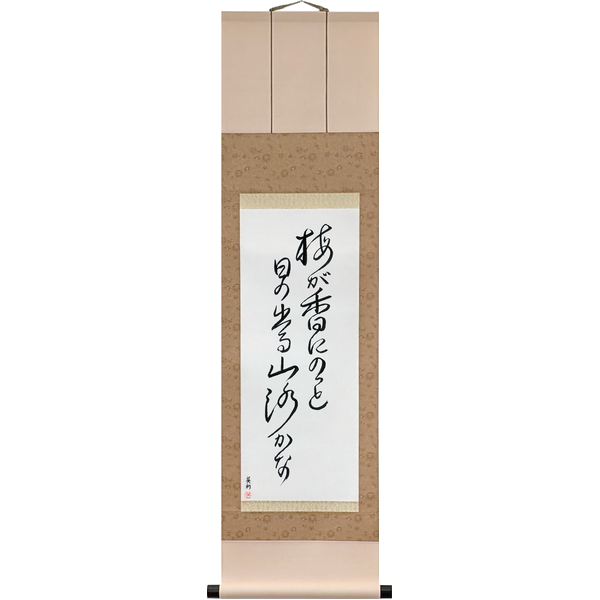
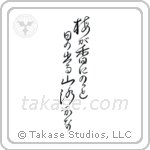
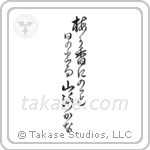
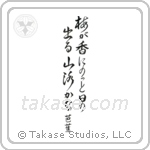
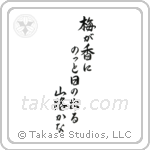
In the scent of plum, all at once the sun comes up; a mountain path.
梅が香にのっと日の出る山路かな (mume ga ka ni notto hi no deru yamaji kana): in the scent of plum, all at once the sun comes up; a mountain path. 梅が香 is the scent of plum, the early-spring season word, and mume is the first printing's own spelling of ume; に marks where the scent is, so the sun comes up where the scent is and not because of it; のっと, notto, is suddenly, with a lurch, a colloquial word with a round warm sound; 日の出る山路 is the mountain path where the sun comes up, and かな the exclamation. It is the opening verse of a linked sequence Bashō composed with his disciple Yaba in Edo in the early spring of 1694, the year he died, printed that summer in the anthology 炭俵, Charcoal Sack; Yaba's answering verse has pheasants crying as they fly up. Readers since have made it one of the verses most often used to show the lightness, karumi, of his last style, and Blyth heard the poet smell the sun. The English follows Haruo Shirane's, from his Early Modern Japanese Literature of 2002.
Plum blossoms are the harbinger of spring. In this poem, I can imagine that Bashō is walking head down along a cold, misty mountain path. He smells the fragrance of the plum blossom and looks up and, suddenly, there is the sun. After a long winter, the fragrance of the plum blossoms contains all the promises of spring.
Couldn't add to cart. Please try again.
Couldn't add to cart. Please try again.

Couldn't add to cart. Please try again.
Couldn't add to cart. Please try again.
Couldn't add to cart. Please try again.
Couldn't add to cart. Please try again.
Couldn't add to cart. Please try again.
Couldn't add to cart. Please try again.