

How admirable, the person the lightning does not enlighten.
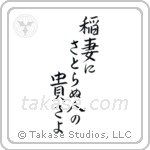
Bashō - How admirable, to see lightning, and not think life is fleeting
稲妻にさとらぬ人の貴さよ
inazuma ni satoranu hito no tattosa yo
Vertical Block VB3C
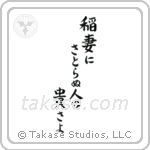
Bashō - How admirable, to see lightning, and not think life is fleeting
稲妻にさとらぬ人の貴さよ
inazuma ni satoranu hito no tattosa yo
Vertical Block VB5C
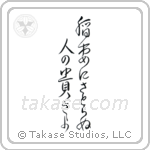
Bashō - How admirable, to see lightning, and not think life is fleeting
稲妻にさとらぬ人の貴さよ
inazuma ni satoranu hito no tattosa yo
Vertical Cursive VC4B
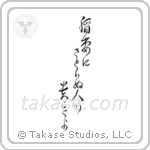
Bashō - How admirable, to see lightning, and not think life is fleeting
稲妻にさとらぬ人の貴さよ
inazuma ni satoranu hito no tattosa yo
Vertical Cursive VC5B
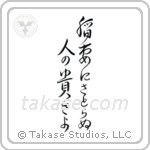
Bashō - How admirable, to see lightning, and not think life is fleeting
稲妻にさとらぬ人の貴さよ
inazuma ni satoranu hito no tattosa yo
Vertical Jiun VD4B
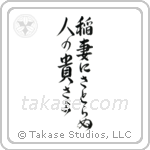
Bashō - How admirable, to see lightning, and not think life is fleeting
稲妻にさとらぬ人の貴さよ
inazuma ni satoranu hito no tattosa yo
Vertical Jiun VD5B
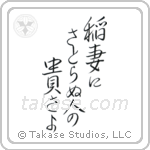
Bashō - How admirable, to see lightning, and not think life is fleeting
稲妻にさとらぬ人の貴さよ
inazuma ni satoranu hito no tattosa yo
Vertical Semi-Cursive VS3C
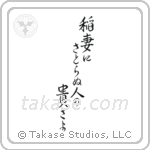
Bashō - How admirable, to see lightning, and not think life is fleeting
稲妻にさとらぬ人の貴さよ
inazuma ni satoranu hito no tattosa yo
Vertical Semi-Cursive VS5C
