

良妻賢母 ryōsaikenbo Good Wife Wise Mother
良妻賢母 (ryōsaikenbo), good wife, wise mother, is a Meiji pairing of two old words. Its earliest use found is an offhand remark about drink in 1880. This study follows the reformers' arguments over it, the state's doctrine of women's education from about 1899, and the two uses Japanese grammar keeps apart.

Abstract
良妻賢母, ryōsaikenbo, good wife wise mother, pairs two old words that had never before been joined: its earliest use found, in 1880, is an unceremonious remark about drink, and neither the National Diet Library's full-text index nor its pre-modern collection holds the four characters together before that. For its first four decades the phrase had no fixed order — three permutations are all in print within a few years of each other — and it was a live argument, used as hard by reformers pressing for women's universities as by the state that eventually adopted it, around 1899, as the name of its doctrine of women's education. Japan repudiated the doctrine after the Second World War, but Japanese grammar keeps two uses of the phrase apart: a formative frame, the goal a curriculum sets for a cohort, and a commendatory frame, what is said of a woman who has been one — and only the second is available to a gift.
Overview
The sense. Both a compliment about a person and the title of a policy, and the two have never quite separated. 精選版日本国語大辞典 and デジタル大辞泉 both gloss it flatly — 「夫に対してはよい妻であり、子に対しては賢い母であること」, being a good wife to one's husband and a wise mother to one's children — with no usage label, no 補説, no register note [1]. A reader who consults only a dictionary meets a compliment; a reader who consults an encyclopedia meets an ideology.
The words. Two ordinary two-character words set side by side: 良妻, a good wife, and 賢母, a wise mother. Nothing in either is unusual. What the words alone cannot show is that the pairing is the invention: the National Diet Library's full-text index of pre-modern Japanese books returns 215 classical records for 良妻 and 298 for 賢母, while the four characters together return one, and that one record is a book of 1917 the library classes as pre-modern by format rather than by date. The words were lying around for centuries. Nobody put them together until the 1880s [2]. And for its first forty years the pairing did not have a fixed order: all three permutations are in print within a few years of each other — 良妻賢母 (2,663 books in the index), 賢母良妻, wise mother first (762), and 賢妻良母, wise wife, good mother (138). One 1892 book on women's education uses all three. The order read here is the one that won in Japan; the 賢母良妻 order survives today in Korean, as 현모양처 [3], and 賢妻良母 is the form modern Chinese uses [4].
The text in English. The house English, Good Wife Wise Mother, is exact as a rendering of the four characters, and the English words are older than the Japanese ones: a good wife and wise mother was already praise in American print in the 1870s, said of a woman in a Sunday-school paper and in an obituary [5][6]. From 1903 the same words carry the Japanese phrase, in English written in Japan and in the Ministry of Education's own account of its schools [7][8].
The historical record
1880, 荒野文雄, Nihon hinkō ron 『日本品行論』, a book of national morals. The earliest known use, and it is entirely unceremonious. In a passage arguing that drink harms a woman more than a man, because the habit passes to her children: 「是故ニ、良妻賢母ハ决シテ酒ヲ嗜マス」 — therefore a good wife and wise mother never takes to drink. In 1880 the phrase is just a category of person, with no policy behind it [9].
1888, a French book on women's education, translated into Japanese by 俣野時中. The four characters render a European argument, and the argument is that education makes one: give a girl intellectual and vocational training and she will be 「嫁してハ良妻賢母たらしめ寡居してハ善良なる工女たらしむる」 — a good wife and wise mother if she marries, and a fine working woman if she is left on her own [10].
1889, the rules of the Peeresses' School, 華族女學校. Founded in 1885 by the Empress's decree and run by the Imperial Household Ministry, the school had its rules revised by the Imperial Household Minister on 1 August 1889, and their Article 2 states its purpose: 「本校教育ノ要旨ハ……上流ノ賢母良妻タルヘキ者ヲ淘冶スルニアリ」 — the essential purpose of this school's education is … to mould those who shall be wise mothers and good wives of the upper class. This is a state institution putting the phrase in its purpose clause a full decade before the Higher Girls' School Order of 1899, and it is in the reversed order. The school's own annual report prints the revised rules; a guide to study in Tokyo reprinted them the same year [11][12].
1892, 巌本善治, Wagatō no joshi kyōiku 『吾党之女子教育』. 巌本 ran the Meiji Girls' School and the journal Jogaku zasshi, and this book shows the phrase was contested rather than settled. He refuses to let it mean one household: 「母妻はたヾ一家一人の母妻のみと限ることなし……ビクトリア陛下は英國民の母なり、ウイラード女史は天下の妻なり、ハンナモアは貧民の母なり、エロイズは一人の愛妻なり」 — a mother and wife is not confined to one household … Queen Victoria is mother to the English people; Miss Willard is wife to all under heaven; Hannah More is mother to the poor; Héloïse was one man's beloved wife. Do not aim girls at being a household's wife from the start, he argues; aim them at becoming 「眞の女、圓滿したる女性」, a true and complete woman, and then both kinds of good wife and wise mother become possible. A few leaves later he lists what his graduates may become — 「或は直ちに良妻賢母となり、或は女教師となり、或は看病婦となり、或は文學者、小說家となり……毫末も强ゆる所ろなし」, a good wife and wise mother, or a woman teacher, or a nurse, or a writer or novelist … we compel not in the least. In the same volume he also writes 賢母良妻 and 賢妻良母. One book, three orders, and the argument is for giving women more [13].
1896, 成瀬仁蔵, Joshi kyōiku 『女子教育』. 成瀬 founded what became Japan Women's University, and he had to fight this phrase with itself. He quotes his opponents using it against him — if a woman gains such knowledge she will be unfit to be a good wife and wise mother — and lists among the formal objections to admitting women to a university that it 「良妻賢母を養成する所にあらざるのみならず、却て良妻賢母に不適當なる影響を與ふべし」. Then he takes it back: a physician does not study only pharmacy, so 「故に女子も亦只料理、裁縫、女禮、及び家政を修めたるのみにては到底眞正の良妻賢母たるを得ざるや明白なり」 — it is plain that a woman who has studied only cookery, sewing, etiquette and household management can never become a TRUE good wife and wise mother [14].
1896, 三輪田真佐子, Joshi shosei ron 『女子処生論』. The same years, a woman educator, arguing the other way round: let women all fix being a good wife and wise mother as the primary aim, and a secondary aim only for those with the ambition for one. In the 1890s this was a live argument with the same four characters on both sides of it [15].
1901, 徳富蘆花, Omoide no ki 『思出の記』. A character brushes aside a woman's plan to stay single and found a women's university: 「其よりも良妻賢母の必要は一般に涉つての事ですよ。如何しても大國民の建物は好家庭の煉瓦を積まなければならぬ」 — the need for good wives and wise mothers is the more general matter; the edifice of a great nation must be built out of the bricks of good households. This passage is the earliest example the Nihon kokugo daijiten, Japan's largest historical dictionary, prints under this headword — twenty-one years after the 1880 leaf above. A first-citation field records the earliest example in that dictionary's own files, not the first use in the language [16].
1903, 菊池大麓, then Minister of Education. Addressing audiences at home, he wrote the Chinese order: 「賢妻良母を造るにはどれ丈けの注意を要するか」 — how much care is needed to make wise wives and good mothers [17]. Six years later, lecturing in London, he gave the phrase to English in the other order.
To 1917, the two grammatical frames. The National Diet Library's full-text index distinguishes two grammatical frames for the phrase, and they do not overlap. The formative frame — a goal somebody is to be shaped toward — is the frame of every institutional witness above: 良妻賢母を養成する (to cultivate), 良妻賢母たらしめ (to make into), 良妻賢母たるべき者を陶冶する (to mould those who shall be), 良妻賢母となる (to become), and the doctrine's own name, 良妻賢母主義. Counted: 主義 446 books, を養成 106, となる 96, たらしめ 49, になる 14. The commendatory frame — said of a particular woman, about what she has been — runs about nine to one behind: である 43, と称 22, の鑑 12. But it is real and unbroken from at least 1895, when a Tokyo magazine writes of 良妻賢母と稱せらるヽ瓜生氏の老母, the aged mother of the Uryū family, who is called a good wife and wise mother [18][19].
1909, 斎藤鹿三郎, Mohan joshi: kakuretaru ijin 『模範女子 : 隠れたる偉人』. On 井上通女, the Edo woman of letters, after quoting 貝原益軒's praise of her scholarship: 「井上通女は、實に模範的の良妻賢母である。此の婦人の行を抽象したものは、即ち良妻の内容、賢母の内容と云ふでもよろしい」 — Inoue Tsūjo is truly a model good wife and wise mother. Abstract this woman's conduct and you may call it the very content of "good wife," the very content of "wise mother." Worth noticing who is being praised: a scholar, praised in the same breath for her learning [20].
1911, 斎藤弔花, Ōishi Chikara 『大石主税』. Of Ōishi Kuranosuke's wife, divorced before the vendetta so that the punishment would not reach her kin: 「良妻賢母の鑑とも稱へられつる婦人」 — a woman who had been called a very mirror of the good wife and wise mother [21].
1912, 足立栗園, Katei hyakuwa 『家庭百話』. Of a woman who cut her own household spending to relieve the poor and died at seventy-two: 「人々大に其の行を賞めたといひます……如何にも良妻賢母の鑑であります」 — people greatly praised her conduct … she was indeed a mirror of the good wife and wise mother [22].
1917, 奥野他見男, Tako no atama 『蛸のあたま』. A comic essay, and the most ordinary use of the four here: 「此の妻君は僕をして忌憚なく云はしむれば稀に見るの良妻賢母である」 — this wife of his is, if you'll let me say it without reserve, a rarely-seen good wife and wise mother [23].
1890 to 1918, the institution. An encyclopedia article traces the hardening of the phrase into policy through the Imperial Rescript on Education (1890), the family-law provisions of the Civil Code (1898), and the Extraordinary Council on Education's 1918 report on girls' education, and calls the whole system by its own name, 良妻賢母主義教育, good-wife-wise-mother-ism education [24]. A second encyclopedia puts it flatly: from the Meiji period to the end of the Second World War, this was the basic principle of women's education in Japan [25].
After 1945, repudiation. The same encyclopedia is equally flat: 「第2次大戦後は,男女同権の立場からこのような教育は基本的に否定された」 — after the Second World War this kind of education was fundamentally repudiated from the standpoint of equal rights. A home-centered version of the ideal survived anyway — home economics in high school was made compulsory for girls alone in 1973, and taught to boys and girls together only from 1994 — and the ratification of the Convention on the Elimination of All Forms of Discrimination against Women in 1985 is named as the thing that began to loosen it [24].
1928 to 1929, and 1958, two literary ironies. A dictionary of four-character idioms illustrates the entry with two literary examples, and both are ironic: 谷崎潤一郎's Some Prefer Nettles (1928–29), 「娼婦と見えるのは上ッ面で、しんは良妻賢母だそうだ」 — she looks like a whore on the surface, but at bottom they say she's a good wife and wise mother [26] — and 開高健's The Naked King (1958), 「型どおりの良妻賢母を演じて」 — playing the stock good-wife-and-wise-mother [27]. Irony is parasitic: the joke only works because good wife and wise mother is a straight thing to say, the way English does the same to pillar of the community without either becoming unusable. What the two quotations establish is that by the 1920s the phrase was familiar enough, and official enough, to be worth needling.
What is not a source. It is not Chinese and it is not classical. The four characters look like a Chinese idiom, and Japanese four-character compounds usually are; this one is not. There is no Confucian text behind it, no Book of Rites passage, nothing to point back to. It was assembled in Meiji Japan out of two ordinary words, and the National Diet Library's pre-modern corpus contains no instance of it at all [2]; the Chinese Buddhist canon's database has 賢妻良母 only in twentieth-century writers [28]. It was not coined by 中村正直. The essay usually pointed to, 善良ナル母ヲ造ル説, 明六雑誌 33, March 1875, is in the reprint his pupils made of his speeches in 1888, 敬宇中村先生演説集, pp. 31–35. It does not contain the four characters, in any order; its words are 善良ナル母, a good mother, 善キ母, 絶好ノ母, and once 良妻, quoting Burns on what a wife's qualities are worth; 賢母 is not in it, and the whole 1888 collection has no 良妻賢母, 賢母良妻 or 賢妻良母 [29]. The attribution in English comes from Sharon Sievers, who wrote in 1983 that it remained for Nakamura Masanao … to coin the phrase; the Japanese scholarship is more careful, and 小山静子, citing 深谷昌志, says only that Nakamura and then 森有礼 used the reversed 賢母良妻 in the Enlightenment years, and that conscious use of 良妻賢母 begins with the journal 女鑑 in 1891 [30][31]. Not evidence of decline: a full-text graph by decade shows this phrase running 730 books in the 1930s and 14 in the 1950s, which looks like a word dying with the regime that used it. It is the corpus, not the word — the same public-domain index falls off a cliff at about 1949 for copyright reasons. The control is decisive: 日本国憲法, the Constitution of Japan, a term that could not exist before 1946, returns 324 books in the 1940s and 113 in the 1960s; 民主主義, democracy, whose use exploded after the war, returns 1,145 in the 1940s and 72 in the 1960s [32].
The word in English
1876 and 1878, the English words before the Japanese phrase. A good wife and wise mother is English praise before it is a translation. A Sunday-school paper of 1876, setting a child to count what a good old-time mother did with her hands, asks: What was she in the home? A good wife, wise mother, prudent housekeeper, a kind mistress [5]. An obituary of 1878, of a woman of Swanzey: She was a pious woman, kind neighbor, good wife, and wise mother [6]. The commendatory frame the Japanese phrase took on later was already the English one.
1903 and 1904, the Japanese phrase in English. The Japan Weekly Mail of 4 April 1903 printed the announcement of an entertainment by the pupils of the Peeresses' School, which describes one of two schools founded by 下田歌子's Imperial Women's Association, whose teaching aims at making them "wise mothers and good wives", in the 賢母良妻 order [7]. The next year the Ministry of Education's Education in Japan, prepared for the Louisiana Purchase Exposition at St. Louis, gives the girls' high schools the object of forming character in women and of imparting knowledge well calculated to make good wives and wise mothers [8].
1909, Baron Dairoku Kikuchi, Japanese Education: Lectures Delivered in the University of London, London: John Murray. The most authoritative statement of the phrase in English: its author is not a translator but Japan's former Minister of Education, lecturing at the University of London in 1907 on his own country's system. Chapter XVIII, "Position of Women," carries Good wife and wise mother as a heading in its summary and GOOD WIVES AND WISE MOTHERS as the running head at page 269:
Our female education, then, is based upon the assumption that women marry, and that its object is to fit girls to become "good wives and wise mothers."
As already stated, we hold that women are born to matrimony, that their natural vocation is to become wives and mothers. Our ideal of womanhood is "good wife and wise mother." We consider home to be the woman's sphere. "Man works outside and woman helps at home," is our maxim.
The maxim he glosses in that last sentence is 男は外、女は内, which is precisely the division of labor the Japanese encyclopedia names as the thing the ideal rests on. Kikuchi did not bring the words into English, which had them; he gave them their most authoritative statement as the name of a policy [33]. The Japanese-English dictionaries take the phrase in the same year: 井上十吉's of 1909 and 武信由太郎's of 1918, under 良妻, both a good wife and wise mother [34][35].
1910s to 1960s, a description of Japan. The phrase does not go quiet in English. Missionary reports, travel books, newspapers and histories of Japanese education carry it in every decade from the 1910s to the 1960s, nearly always in quotation marks as the stated aim of Japanese girls' schooling [36].
1932, Bruce Bairnsfather, Laughing through the Orient. Puts it in a character's mouth in quotation marks — "so just you stay home and be 'a good wife and wise mother'" — which tells us that by the 1930s an English humorist could expect readers to recognize it as a Japanese formula [37].
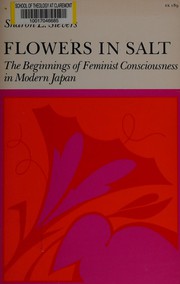
1975 to 2013, scholarship. From the 1970s it is chiefly a term of scholarship, and an object of criticism rather than a compliment: the Japan Interpreter in 1975 on "the old moral ideal of ryōsai kenbo … in a negative way" [38]; Sharon Sievers's Flowers in Salt: The Beginnings of Feminist Consciousness in Modern Japan [30]; Kathleen Uno's essay titled, with a question mark, "The Death of 'Good Wife, Wise Mother'?" [39]; and the standard monograph, 小山静子's, published in English by Brill in 2013 as Ryōsai kenbo: The Educational Ideal of "Good Wife, Wise Mother" in Modern Japan [31]. The Internet Archive's full text gives 1,341 hits for "good wife and wise mother", 1,189 for "good wife, wise mother", and 543 for "ryosai kenbo", most of the datable ones post-1970 academic writing in women's history, gender studies or the history of education [36]. That is a statement about an instrument dominated by scholarly publishing, not about English generally: a domesticity ideal is openly aspirational for a large number of English speakers who choose it for themselves, and good wife and wise mother sits comfortably in that vocabulary without irony.
Today. The house English is Good Wife Wise Mother, and as a rendering of the four characters it is exact; it is also, word for word, Kikuchi's [33], and the praise English already gave a woman in 1878 [6]. What a rendering of this phrase must keep is the thing no four English words can carry: that in Japanese it is simultaneously something one might say about a grandmother and the title of a chapter in a history of how women were kept out of universities.
A reading
The phrase was not built by the state; the state adopted a phrase that was already ordinary — the 1880 first witness is a remark about drink, with no policy anywhere near it. In the 1890s the people using it hardest were the ones arguing for women's universities: 巌本 listing novelist and evangelist beside it as futures for his graduates, 成瀬 insisting that a woman taught only cookery and sewing can never be a true one. A word reformers fought to keep is not a word with something wrong in it. It is a word that was taken.
A good wife and a wise mother is a description of a life spent well on other people, and it is also, plainly, a live and chosen ideal in English right now rather than a museum piece. What the history adds is a fact about the second life the words had in Japan: the woman of whom these four characters are said is being given a real past, not a decoration.
Two things stand out. That the phrase names a historical doctrine as well as a person — better heard as history than as a friend's correction. And that grammar settles which sense is meant: Japanese distinguishes making someone into a 良妻賢母 from saying she is one, and the phrase said of a named woman can only be the second. The 1917 sentence about somebody's wife, and the 1909 book that gives the title to a woman scholar, are the register that carries.
References
- 「良妻賢母」, 精選版日本国語大辞典 · デジタル大辞泉, at kotobank. https://kotobank.jp/word/良妻賢母
- National Diet Library Digital Collections, full-text search on the three orderings of the phrase and its two component words, pre-modern facet. https://lab.ndl.go.jp/dl/
- 「현모양처」, Korean Wikipedia. https://ko.wikipedia.org/wiki/현모양처
- 「賢妻良母」, Wiktionary (Chinese, xiánqīliángmǔ). https://en.wiktionary.org/wiki/賢妻良母
- The Sunday School Times, vol. 18, no. 35, 26 August 1876, at the Internet Archive text layer. https://archive.org/details/sim_sunday-school-times_1876-08-26_18_35
- Zion's Herald, vol. 55, no. 2, 10 January 1878, obituaries, at the Internet Archive text layer. https://archive.org/details/sim_zions-herald_1878-01-10_55_2
- The Japan Weekly Mail, 4 April 1903, "Tableaux vivants in Tokyo", in the bound volume for January–June 1903, at the Internet Archive text layer. https://archive.org/details/jwm-bound-1903.1-6
- Department of Education, Japan, Education in Japan, prepared for the Louisiana Purchase Exposition at St. Louis, U.S.A., 1904, girls' high schools, at the Internet Archive text layer. https://archive.org/details/educationinjapa00monbgoog
- 荒野文雄, 日本品行論, 山中市兵衛, 1880, scan 44. https://dl.ndl.go.jp/pid/758063/1/44
- ル・アルヂー・ド・ボーリュ著, 俣野時中訳, 女子教育論, 1888, scan 27. https://dl.ndl.go.jp/pid/808882/1/27
- 華族女学校年報, the bound annual reports, the report for August 1889 to August 1890, ch. 2, 規則, scan 146. https://dl.ndl.go.jp/pid/812641/1/146
- 東京留学指針, 興文社編, 1889, scan 32. https://dl.ndl.go.jp/pid/813227/1/32
- 巌本善治, 吾党之女子教育, 1892, scan 9. https://dl.ndl.go.jp/pid/808102/1/9
- 成瀬仁蔵, 女子教育, 1896, scan 30. https://dl.ndl.go.jp/pid/808868/1/30
- 三輪田真佐子, 女子処生論, 1896, scan 22. https://dl.ndl.go.jp/pid/757146/1/22
- 徳富蘆花, 思出の記, 1901, scan 230. https://dl.ndl.go.jp/pid/885690/1/230
- 菊池大麓, 九十九集, 田所美治編, 1903, scan 130. https://dl.ndl.go.jp/pid/1053062/1/130
- National Diet Library Digital Collections, full-text search on the formative and commendatory grammatical frames of 良妻賢母. https://lab.ndl.go.jp/dl/
- 裏錦, 尚絅社, February 1895, a snippet at National Diet Library Digital Collections. https://dl.ndl.go.jp/pid/11004074
- 斎藤鹿三郎, 模範女子: 隠れたる偉人, 1909, scan 56. https://dl.ndl.go.jp/pid/778899/1/56
- 斎藤弔花, 大石主税, 1911, scan 109. https://dl.ndl.go.jp/pid/885586/1/109
- 足立栗園, 家庭百話, 1912, scan 40. https://dl.ndl.go.jp/pid/904430/1/40
- 奥野他見男, 蛸のあたま, 1917, scan 162. https://dl.ndl.go.jp/pid/906123/1/162
- 千野陽一, 「良妻賢母」, 改訂新版世界大百科事典, at kotobank. https://kotobank.jp/word/良妻賢母
- 「良妻賢母」, ブリタニカ国際大百科事典 小項目事典, at kotobank. https://kotobank.jp/word/良妻賢母
- 谷崎潤一郎, 蓼喰ふ虫, 1928–29, quoted in 四字熟語を知る辞典, at kotobank. https://kotobank.jp/word/良妻賢母
- 開高健, 裸の王様, 1958, quoted in 四字熟語を知る辞典, at kotobank. https://kotobank.jp/word/良妻賢母
- CBETA, full-text search on 賢妻良母 and 良妻賢母: four texts, all by Republican-era writers (太虛, 演培, 印順). https://cbdata.dila.edu.tw/stable/search?q=賢妻良母
- 中村正直, 善良ナル母ヲ造ル説, in 敬宇中村先生演説集, 1888, scan 18–20. https://dl.ndl.go.jp/pid/808657/1/18
- Sharon L. Sievers, Flowers in Salt: The Beginnings of Feminist Consciousness in Modern Japan, Stanford University Press, 1983, p. 22.
- Koyama Shizuko, Ryōsai kenbo: The Educational Ideal of "Good Wife, Wise Mother" in Modern Japan, Brill, 2013, p. 4 n. 12.
- National Diet Library Digital Collections, full-text search by decade on 良妻賢母, 日本国憲法 and 民主主義. https://lab.ndl.go.jp/dl/
- Baron Dairoku Kikuchi, Japanese Education: Lectures Delivered in the University of London, John Murray, London, 1909, ch. XVIII, pp. 255–269, at the Internet Archive text layer. https://archive.org/details/japaneseeducatio00kikuuoft
- 井上十吉, 和英辞典 : 新訳, 三省堂, 1909, s.v. Ryōsai, scan 644. https://dl.ndl.go.jp/pid/1869465/1/644
- 武信由太郎, 武信和英大辞典, 研究社, 1918, s.v. ryōsai, scan 830. https://dl.ndl.go.jp/pid/925665/1/830
- Internet Archive full-text search, counts on four English and romanized forms of the phrase, sorted by year. https://be-api.us.archive.org/ia-pub-fts-api
- Bruce Bairnsfather, Laughing through the Orient, 1932, at the Internet Archive text layer. https://archive.org/details/laughingthrougho0000bair
- Japan Interpreter, vol. 10, no. 2, Autumn 1975, at the Internet Archive text layer. https://archive.org/details/japan-interpreter_autumn-1975_10_2
- Kathleen Uno, "The Death of 'Good Wife, Wise Mother'?", in Andrew Gordon, ed., Postwar Japan as History, University of California Press, 1993, pp. 293–322, contents page at the Internet Archive. https://archive.org/details/postwarjapanashi0000unse
Books Cited
Books this article cites that can be ordered today.
ISBN 0804711658