

二天一流 niten ichiryū Two Heavens One Style
二天一流 (niten ichiryū), the Niten school, is the name of Miyamoto Musashi's school of two swords, followed here from his first licences into English.

Abstract
二天一流, niten ichiryū, the Niten school, is the name the school of two swords that Miyamoto Musashi's five scrolls teach has carried since at least 1721, when an epitaph names it. A treatise under his name, in copies of 1605 and 1607 that differ and whose attribution was long doubted, confers mastery in 円明流, the Enmei school; his memorandum of 1641, Hayashi Razan's inscription and his son's stele of 1654 call the school 二刀, two swords, and 二天, two heavens, is Musashi's own Buddhist sobriquet. The five scrolls use both names but survive only in copies made after his death, so whether Musashi renamed the school in his last years, as his modern biographers and translators read it, or his pupils did after him, as the Japanese dictionaries say, the copies cannot settle. Two Heavens One Style reads the school's name one character at a time; it is in English print by 2004, and word for word in a translation of 2012.
Overview
The sense. The name of the school of two swords that Musashi's five scrolls teach, which took his own name 二天 at the end of his life or after it; before that the school was 円明流 and 二刀一流. The five scrolls themselves, 五輪の書, have their own history; the two names meet in the same witnesses.
The words. 二天一流 is two words, not four. 一流 is one word, a school, this school: the text says this school, my school, the way of this school throughout, and every school of the sword is a 流. 二天, two heavens, is otherwise a Buddhist or a literary compound (the sun and moon devas; two of the four heavenly kings; a benefactor set beside heaven), but here it is not a compound at all: it is Musashi's own name, the sobriquet he signed his paintings with and the name on the stele his son raised [1]. So niten ichiryū is the Niten school, the way one says the Yagyū school; it does not describe a technique. The English Two Heavens One Style reads the four characters one at a time, as English has done since at least 2004; the 二天 in it is a name.
The text in English. The school's name has gone three ways: two swords as one, closest to Musashi's own word for it; Two Heavens One Style, one character at a time, since at least 2004; and Two Heavens as One, which reads 二天 as the man's name.
The historical record
1605 and 1607. Miyamoto Musashi 宮本武蔵, attributed, 兵道鏡, the Mirror of the Way of Combat. A set of articles given to a pupil as a licence, the earliest text that carries Musashi's name. A copy in the Yamauchi library at Kōchi, titled 兵道鏡, closes on the words these articles … the inner teachings … discern their reason, is signed 天下一 宮本武蔵守 藤原義, the last character of the name in cursive, and carries the date 慶長十二年十一月吉日, an auspicious day of the eleventh month of 1607; that is the licence's date, and the copy itself is not dated [2]. The same closing was printed in 1915 under the title 圓明流劒法書, the Enmei school's book of the sword, undated, signed 圓明流天下一 宮本武藏守, its articles set in three groups [3]. Two modern translators give the colophon of another copy, addressed to Ochiai Chūemon and dated 1605: Miyamoto Musashi no kami, Fujiwara Yoshitsune, the Enmei Ryu, the Best Adept in Japan [4]; and, with the body of the licence, I hereby confer this scroll authenticating attainment of the highest level of technical mastery in the Enmei-ryū, signed Enmei-ryū "Champion of the Realm" Miyamoto Musashi-no-Kami Fujiwara Yoshitsune, a text whose close counts its articles in four groups, six, seven, seven and eight, twenty-eight in all, which Bennett says Musashi later rewrote as thirty-six [5]. The copies are not one text. Tokitsu knows two, One of them is composed of twenty-one articles and the other of twenty-eight articles, and counts twenty-two in the 圓明流劒法書 [4]; Wilson gives the first edition only eighteen articles, later amended to thirty-five [6]. Nor was the attribution settled. The 1915 editor thought the 圓明流劒法書 might be drawn from the five scrolls, and the name Enmei one given later, 後世に至りて名づけられたるもの [3]; Tokitsu does not accept the 圓明流劒法書 as Musashi's, judging it probably composed on the basis of excerpts from the Gorin no sho by adepts of the School of Musashi [4]; Wilson writes that many consider it to be a forgery [6]; and Uozumi Takashi, verifying six extant copies of the work and four related texts, holds that Musashi wrote it in his twenty-fourth year [5]. A survey of the sword schools written in 1843, below, adds that the licences Musashi issued in 1607 all read 圓明流 [7]. Whichever copy is his, the name these texts and that survey give the school is Enmei.
1641. Miyamoto Musashi 宮本武蔵, 兵法三十五箇条, the memorandum for Lord Hosokawa Tadatoshi. The thirty-five articles Musashi presented to his patron open by naming the school: the two-sword school of strategy, which I have trained in for years and now for the first time set down on paper [8]. This is the oldest dated text in which Musashi calls his school two swords.
Before 1657. Hayashi Razan 林羅山, the inscription on Musashi's portrait. The Confucian scholar of the shogun's court wrote a Chinese eulogy on a portrait of Musashi, quoted later as: the swordsman Shinmen Genshin holds a sword in each hand and calls it the school of two swords as one [9]. The 二天記, below, says the pupil Ishikawa Sakyō 石川左京 had the portrait made when Musashi left Edo, kept it as an object of devotion, and asked Razan for the words [10]; Bennett dates the inscription to about 1638–39 [5]. Again, two swords.
1643 to 1645. Miyamoto Musashi 宮本武蔵, the five scrolls. The preface, as the copies give it: the way of strategy I call the Niten school, and I mean now for the first time to set down in a book what I have trained at for years; in the first ten days of the tenth month of 1643 I climbed Mount Iwato in Higo, bowed to heaven, paid reverence to Kannon, faced the Buddha, I, Shinmen Musashi Fujiwara no Genshin, a warrior born in Harima, sixty years old [11]. The Water scroll opens the same way, naming the Niten school. But when the Earth scroll comes to explain the name, the name it explains is the other one: to make known the use of these two swords it is called the two-sword school (the wording varies slightly witness to witness), and the Fire and Void scrolls open on the two-sword school, while the Wind scroll, which opens on the other schools, comes to the name only at its close. The book also never calls itself 五輪書; what it says is why this book of strategy is made in five scrolls: I divide the way in five and write it scroll by scroll so its reasons can be known … as earth, water, fire, wind and void, in five scrolls. The colophons are dated the twelfth or thirteenth day of the fifth month of 1645, a week before the received date of his death, and address the scrolls to different pupils across the surviving copies. No copy in Musashi's own hand survives; the copy the encyclopedias call the best is the one his pupil Terao Magonojō 寺尾孫之丞 made for a pupil of his own in 1667. The copies show where each name stands in the text, not who first wrote it there.
1654. Miyamoto Iori 宮本伊織, the stele at Kokura. Nine years after the death, Musashi's adopted son raised a stone whose title names him Niten, styled thus, and whose text says: Musashi Genshin, styled Niten … was the founder of two-sword strategy [12]. On the stone, 二天 is the man, and the art is still called two swords.
1721. 細井知慎 (Hosoi Kōtaku), the epitaph of Kawamura Michiaki 河村通顕. The epitaph of a man born in Edo in 1665, who served the Hosokawa lord of Higo from his twenty-seventh year, says that he loved learning, calligraphy and the sword, and received the true line of Shinmen Musashi's Niten school, and the secret of the five scrolls of his strategy, 又受新免武藏二天一流之正脈、傳其兵法五巻之秘. It is dated the twenty-second day of the eleventh month of the sixth year of Kyōhō, 1721, and is known from a manuscript collection of epitaphs the National Diet Library dates to 1900 [13]. It is the earliest dated text in the sources read that gives the school the name 二天一流, seventy-six years after Musashi's death, and it already pairs the name with the five scrolls.
1755 to 1776. Toyota Kagehide 豊田景英, 二天記, the Kumamoto biography. Compiled over three generations of the Toyota family from what Musashi's surviving pupils told the grandfather, and the source of most of what is told about him. Its note on sources is dated 1755 and belongs to the book's first form, 武公伝, which Kagehide renamed 二天記 and had prefaced in 1776; the note says a little was added from the book of the five … and the like, which the 1910 print writes 五倫の書 and the 1909 print 五輪ノ書. Its account of the death says he passed the five-ring scrolls to Terao Katsunobu and the thirty-five articles to Terao Kumanosuke Nobuyuki 寺尾求馬助信行; and of the school it says simply that it is called 二天一流. It also records where the name came from: Musashi took the Buddhist name Niten Dōraku through the monk Shunzan of Taishōji [10].
1682 to 1843. The other names. A manuscript of 1682 carries the 1641 memorandum's title under the Enmei name, 円明流兵法三十五ケ条, the Enmei school's thirty-five articles [14]. A memorial stone of 1744 at Kasadera in Nagoya, raised by his pupils' pupils in the year of his 百年忌, the hundredth-year memorial, calls it the Enmei school of two-sword strategy [15]; a stone of 1793 at Shinpōji that followed the first forty-nine years later writes the true Enmei school [16]; and a survey of the sword schools by an Okayama retainer from a family of sword instructors, its preface dated the first winter month of 1843, calls Musashi's school also the Enmei school, says he thought it out afresh and founded a two-sword school, and names the 兵道鏡 as the school's book [7]. Enmei is the name of the licences of Musashi's youth and of the 兵道鏡 above, and it lived on, in the copy of 1682 and on the stones, in the lines his early pupils carried away.
1892. The Kumamoto domain school's roster. When the Ministry of Education printed its survey of the former domains' schools, Kumamoto's listed its sixteen instructors of the sword by school, and two of the schools are Musashi's: two instructors of the 二天流 and three of the 二天一流 [17]. Under the domain, in the town where the five scrolls were written, the school was taught under two forms of the name.
1909. The five scrolls in print. The 顕彰会's biography of Musashi printed the five scrolls whole as its ninth chapter [18], and the same year 三橋鑑一郎 published them with other writings of the school and the 二天記 as 『剣道秘要』, catalogued also under the title 二刀一流剣道秘要, the two-sword school's essentials of the way of the sword [19].
The dictionary today. 二天一流, a school of swordsmanship founded by Miyamoto Musashi, at first called the Enmei school, and after Musashi's death renamed by his pupil Terao Kumanosuke Nobuyuki; the same entry gives as the name's first use the five scrolls' preface, 兵法の道、二天一流と号し [1]. One encyclopedia, the 日本大百科全書, adds that the renaming was about 1666, from the master's Buddhist name [1].
What is not a source. Musashi's twenty-one articles of 1645, the 独行道, have their own history and are not a witness to the name. The English explanations of 二天 as two swords raised to the sky are the translators' guesses, named as such below.
The name in English
1974. Victor Harris, A Book of Five Rings. Harris writes the school Ni Ten Ichi Ryu and explains, Niten means "Two Heavens", said by some to allude to his fighting attitude with a sword in each hand held above his head; he heads the naming section The Name Ichi Ryu Ni To (One school—two swords) [20]. His pupil's name is wrong throughout: Teruo Nobuyuki in the introduction and Teruo Magonojo at the colophons, for Terao 寺尾, and Nobuyuki 信行 is the brother, not the man the scrolls are addressed to; the 1982 reprint reads Two Heavens-as-One School.
1993. Thomas Cleary, The Book of Five Rings. Cleary renders the school the Individual School of Two Skies, reading 一流 as individual and 天 as sky, and the naming section Naming This Individual School "Two Swords", with Two Swords in One in the text [21].
2004. William Scott Wilson, The Lone Samurai. Wilson's biography of Musashi quotes the opening of the 1641 memorandum as Having trained myself daily in the Two Heavens, One Style, I now take brush to paper, and lists the memorandum's first heading as Calling this the Way of Two Heavens, One Style [6]. The Japanese of both says two swords, 兵法二刀の一流 and 此道二刀と名付事 [8], so the English gives Musashi's own memorandum the school's later name. That follows Wilson's own dating: in his narrative Musashi was now calling his style the Niten Ichi-ryu when Hosokawa invited him to Kumamoto in 1640 [6].
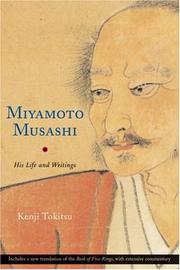
2004. Kenji Tokitsu, Miyamoto Musashi: His Life and Writings. Tokitsu calls the school School of the Two Heavens United, or School of Two Swords Raised to the Heavens Becoming One, offering the two swords raised toward the sky as the sense of 二天, and he gives the change to Musashi himself, after Hosokawa Tadatoshi's death in 1641: Up to this point, Musashi had called his school Enmei ryu (School of the Shining Circle), but at this time he changed the name to Niten ichi ryu. His note on the name says what the Japanese shows: In the Gorin no sho, Musashi designates his school by this name only twice. He usually uses Nito ichi ryu [4].
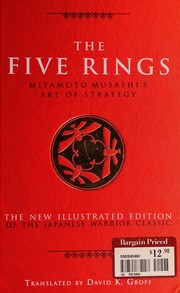
2012. David K. Groff, The Five Rings: Miyamoto Musashi's Art of Strategy. Groff keeps both names where the text has them, each followed by its English in the book's own square brackets: the preface reads My way of military strategy I call the Ni Ten Ichi Ryū, Two Heavens One Style, and so does the opening of the Water scroll, while the Earth scroll's naming section reads I call this the Ni Tō Ichi Ryū, Two Swords One Style [22]. His note to the preface says what the Japanese shows: Musashi uses this name for his style only twice; otherwise, he uses the term "Two Sword Style" or "Two Swords One Style", and 二天 was also the pen-name he used to sign and seal his calligraphy later in life; he too gives the change to Musashi: Presumably Musashi changed the name after his enlightenment to the Way [22].
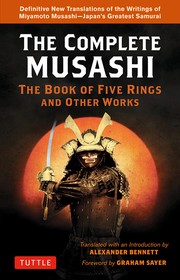
2018. Alexander Bennett, The Complete Musashi. A translation built on Uozumi Takashi's collated text reads the two names in the five scrolls as a change Musashi was making himself: In Gorin-no-sho he uses both appellations, Nitō Ichi-ryū and Niten Ichi-ryū, and it seems he was still in the process of rewriting the manuscript to reflect his school's name change in favor of the latter. Thus, it was at the very end of his life in Kumamoto that the school became "School of Two Heavens as One" instead of "Two Swords as One." In a note he adds that in the Fire, Wind and Ether scrolls he refers to it mostly as Nitō Ichi-ryū (School of Two Swords as One). The dictionaries give the renaming to a pupil after the death. Bennett, with his it seems, gives it to Musashi in his last months; Tokitsu gives it to Musashi after 1641, Wilson by 1640, and Groff after his enlightenment. Bennett also translates the 兵道鏡 [5].
Today. JMdict: 二天一流, style of classical Japanese swordsmanship involving use of two swords [23].
A reading
二天一流 is the school's name in the dictionaries, and it was the school's name by 1721, when an epitaph says the man it honors received the true line of Shinmen Musashi's Niten school with the secret of the five scrolls. What the dated texts say plainly is that it is not the name Musashi's own dated writing uses: the licences under his name say Enmei, the memorandum of 1641 says two swords, and 二天 was the man. The five scrolls say both of the later names, and they survive only in his pupils' copies, so whether Musashi renamed the school himself, as Tokitsu, Wilson, Groff and Bennett read it, each on a different date, or his pupils did after him, as the dictionaries say, the copies cannot settle. This reading takes 二刀一流 as Musashi's own word for the school he taught at the end, and 二天一流 as the school's; a rendering of the name keeps 一流 as one word, school, and Two Heavens only as a name.
References
- 「二天一流」・「二天」, 精選版日本国語大辞典・日本大百科全書, at kotobank. https://kotobank.jp/word/二天一流
- 宮本武蔵, attributed, 『兵道鏡』, manuscript copy of a licence dated 慶長十二年 (1607), 高知県立高知城歴史博物館 山内文庫, at the 国書データベース, images 4 and 22. https://doi.org/10.20730/100211168
- 宮本武蔵, attributed, 『圓明流劒法書』, in 『武術叢書』, 1915, scans 143 to 146, with the editor's 解題, scan 5. https://dl.ndl.go.jp/pid/945805/1/143 · https://dl.ndl.go.jp/pid/945805/1/146 · https://dl.ndl.go.jp/pid/945805/1/5
- Kenji Tokitsu, Miyamoto Musashi: His Life and Writings, translated by Sherab Chödzin Kohn, Shambhala, 2004, pp. xiii, 126–27, 198, 363 and 390.
- Alexander Bennett, translator, The Complete Musashi: The Book of Five Rings and Other Works, Tuttle, 2018, read in the unpaginated EPUB: Uozumi Takashi's foreword; the introduction; the Earth Scroll, note 2; Heidōkyō, its main points and close.
- William Scott Wilson, The Lone Samurai: The Life of Miyamoto Musashi, Kodansha International, 2004, pp. 104, 110, 258 and 259.
- 源徳修, 『撃剣叢談』, preface dated 天保十四年 (1843), in 『武術叢書』, 1915, scans 90 and 107. https://dl.ndl.go.jp/pid/945805/1/90 · https://dl.ndl.go.jp/pid/945805/1/107
- 宮本武蔵, 『兵法三十五箇条』, 1641, in 『武術叢書』, 1915, scan 123, and 『宮本武蔵』, 1909, scan 63. https://dl.ndl.go.jp/pid/945805/1/123 · https://dl.ndl.go.jp/pid/992019/1/63
- 林羅山, 武蔵像賛, before 1657, quoted in 『肥後文献叢書』, 第二巻, 1910, scan 102, and 『宮本武蔵』, 1909, scan 85. https://dl.ndl.go.jp/pid/766733/1/102 · https://dl.ndl.go.jp/pid/992019/1/85
- 豊田景英, 『二天記』, 安永五年 (1776), in 『肥後文献叢書』, 第二巻, 1910, scans 94, 95, 96 and 101. https://dl.ndl.go.jp/pid/766733/1/94 · https://dl.ndl.go.jp/pid/766733/1/96 · the note as printed in 『二刀一流剣道秘要』, 武徳誌発行所, 1909 (NDL full-text excerpt; the page is not open outside Japan). https://dl.ndl.go.jp/pid/860425
- 宮本武蔵, 五輪書, 1643–45, in three typesets: 『宮本武蔵』, 1909; 『武術叢書』, 1915; 『原本五輪書』, 教材社, 1939. https://dl.ndl.go.jp/pid/992019/1/97 · https://dl.ndl.go.jp/pid/945805/1/127 · https://dl.ndl.go.jp/pid/1071527/1/7
- 宮本伊織, the Kokura stele, 1654, printed in 『本朝武芸小伝』, 1716, in 『武術叢書』, 1915, scan 42; a manuscript copy in 『扶桑名画伝』, scan 77; and 『宮本武蔵』, 1909, scan 80. https://dl.ndl.go.jp/pid/945805/1/42 · https://dl.ndl.go.jp/pid/2551785/1/77 · https://dl.ndl.go.jp/pid/992019/1/80
- 細井知慎 (広沢), 河村君墓碣銘并序, 享保六年 (1721), in 『墓碣銘 地方之部』, manuscript, NDL date 1900, scans 36 and 37. https://dl.ndl.go.jp/pid/2536559/1/36 · https://dl.ndl.go.jp/pid/2536559/1/37
- 『円明流兵法三十五ケ条』, manuscript copy dated 天和2 (1682), 日体大民和, at the 国書データベース. https://doi.org/10.20730/100338139
- A memorial stele, 延享元年 (1744), Kasadera, Nagoya, quoted in 『宮本武蔵』, 1909, scan 57. https://dl.ndl.go.jp/pid/992019/1/57
- A memorial stele, 寛政五年 (1793), Shinpōji, quoted in 『宮本武蔵』, 1909, scan 58. https://dl.ndl.go.jp/pid/992019/1/58
- 文部省 編, 『日本教育史資料』, 〔3〕 諸藩の部 西海道, 1892 in the NDL's item record (its digital-collection listing gives 1890), scan 115. https://dl.ndl.go.jp/pid/809556/1/115
- 宮本武蔵遺蹟顕彰会, 『宮本武蔵』, 金港堂, 1909, scans 97 to 120. https://dl.ndl.go.jp/pid/992019/1/97
- 宮本武蔵, 三橋鑑一郎 ed., 『剣道秘要』, 武徳誌発行所, September 1909, NDL record (contents 五輪之書, 兵法五法之巻 and others, with 武蔵実伝二天記; the page is not open outside Japan). https://dl.ndl.go.jp/pid/860425
- Victor Harris, translator, A Book of Five Rings, Overlook Press, 1974.
- Thomas Cleary, translator, The Book of Five Rings, Shambhala, 1993.
- David K. Groff, translator, The Five Rings: Miyamoto Musashi's Art of Strategy, Watkins, 2012; read in the Chartwell Books edition, 2016, pp. 22, 44, 61, 80 and 247.
- JMdict (EDRDG), 「五輪書」and「二天一流」, at jisho. https://jisho.org/word/五輪書 · https://jisho.org/word/二天一流
Books Cited
Books this article cites that can be ordered today.
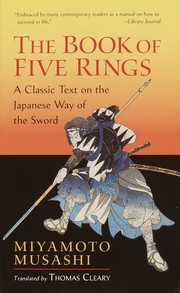
ISBN 0879510188
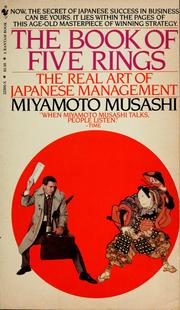
ISBN 055322509X
ISBN 1590302486
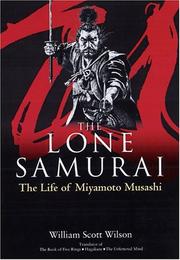
ISBN 477002942X
ISBN 1590300459
ISBN 9780785834007
ISBN 9784805316160