

痛みは体から抜ける弱さ itami wa karada kara nukeru yowasa Pain is Weakness Leaving the Body
痛みは体から抜ける弱さ (itami wa karada kara nukeru yowasa) renders the American training-field saying Pain is weakness leaving the body. The English is in print by 1987, and the Marine Corps made it a recruiting advertisement in 1999. This study follows the English, and finds no document behind its attribution to a decorated general.

Abstract
痛みは体から抜ける弱さ is the house's own Japanese rendering, made by 2010, of an American training-field saying: Pain is weakness leaving the body. The English is in print by 1987, in a wrestler's line in a high-school yearbook, and in the Naval Academy's yearbook by 1988; it is on T-shirts in the Marine Corps' town of Quantico by 1991, called simply the Marine slogan by 1993, and made a Marine Corps recruiting advertisement in March 1999. A popular attribution to Lieutenant General Lewis "Chesty" Puller has no known document behind it, and first appears in print in 2015, decades after Puller's death. No Japanese source found carries the sentence; the rendering uses 抜ける, the ordinary Japanese verb for tiredness or air leaving a body, so the slogan reads as Japanese rather than as a translation.
Overview
The sense. One sense, the training field's: the pain of training is the weakness going out of you, so it is good.
The words. 痛み is pain, the noun from 痛む, and は makes it the topic. 弱さ is weakness, the noun from 弱い. Between them stands 体から抜ける, leaves from the body, a clause that describes the weakness: the whole is pain is the weakness that leaves the body, with the is left unsaid, which is how Japanese writes a headline or a motto. The verb is the one the sentence turns on. 抜ける is what comes out of something it was inside: the dictionary's second sense is what filled or was held inside goes out, with air from a tire and a smell as examples; its fourth is a force or a habit going out of a person, the tiredness leaves, the strength goes out of the hips [1]. The English leaving is the same picture, and Japanese has it ready-made: Sherwood Anderson wrote in 1919 of a sick woman that the weakness had passed from her body as by a miracle [2], and a Japanese guide to reading English put that sentence in 1957 as 彼女の体からはまるで奇跡のように弱さが抜け出た, from her body, as if by a miracle, the weakness went out [3], the scroll's own words for it, decades before the slogan needed them. The particle is から, from; the sentence needs it to be grammatical.
The text in English. For this phrase the usual order runs in reverse: the text is English and the Japanese is the translation. The English has one form, with just, only or merely sometimes inserted, and early on the feeling of before weakness; the recruiting ad's line added the change is forever after it.
The historical record
1987. Goldbug, the yearbook of Amherst Regional High School, Massachusetts, p. 73. The earliest print known. A senior on the wrestling and track teams gives as his line: Pain is the feeling of weakness leaving the body. The absence of weakness is the presence of strength [4]. Nothing on the page ties it to the military.
1988. Lucky Bag, the yearbook of the United States Naval Academy, vol. 2, p. 680. A midshipman who had worked out with the seals keeps three golden rules, the third of them pain is weakness leaving the body [5]. The saying is in the Navy before it is in a Marine Corps advertisement.
1991. The Washington Post, 6 June. Quantico, Virginia, the Marine Corps' base town, has variety stores selling T-shirts with slogans such as 'Pain is Weakness Leaving the Body.' The Dictionary of Modern Proverbs, which quotes it as its earliest example, calls the saying an unofficial slogan in the U.S. Marine Corps and also common among "extreme" athletes [6].
1993. The Marine Corps' own journal, and a farmer. The Marine Corps Gazette for December quotes it beside the older one, "No pain, no gain." "Pain is weakness leaving the body." [7]. The same year Joel Salatin, writing on raising chickens, can say You know the Marine slogan and expect the reader to [8].
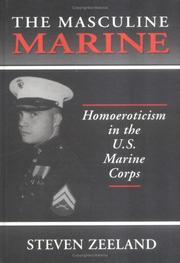
1996. Steven Zeeland, The Masculine Marine. An interviewed Marine recites a favorite DI aphorism: "Pain is weakness leaving the body," and the author repeats it as something taught at boot camp [9]. By now it is the drill instructors' saying.
March 1999. Leatherneck, vol. 82 no. 3. The Marine Corps made the saying an advertisement. A full-page recruiting ad, PAIN IS WEAKNESS LEAVING THE BODY. THE CHANGE IS FOREVER, with the marines.com address, first appears in the Marine Corps Association's own magazine in this issue (the three issues before it do not carry it) and runs through October 2006, in twenty-four issues, and in two magazines a seventeen-year-old reads, a Scholastic current-events magazine (2003, 2006) and the FFA's own magazine (1999 on). The ad names no author [10].
October 1999. Swim News, no. 253. Sport has it as its own: a swimmer's column under the title Pain is Weakness Leaving the Body [11].
2004. Stephen F. Tomajczyk, To Be a U.S. Marine. The saying in a drill instructor's mouth, answering a recruit: PAIN? Well that's GOOD! Pain is weakness leaving the body [12].
2006. David A. Combs, Black Chinook: An Army Ranger's Story. The Army has it too: Often we joked, "Pain was a sign of weakness leaving the body." [13].
2011. Karl Marlantes, What It Is Like to Go to War, p. 16. A Marine officer of the Vietnam war on what carried him: I was in situations where any reasonable person would have quit, but I had become a Marine and Marines aren't reasonable people. Quitting is unthinkable and pain is just weakness leaving the body. A Navy chaplain's 2014 paper quotes this sentence with its page and calls it the Marine warrior's ethos, asking whether an ethos that never admits weakness is why Marines do not ask for help [14][15].
April 2012. Men's Health, vol. 27 no. 3. SEAL instructor aphorism: Pain is just weakness leaving the body [16].
2015. Keith Trotter, 100 Small Steps. The attribution appears in print with a date: "Pain is weakness leaving the body" —Lt. General Lewis B. "Chesty" Puller, USMC, (c. 1955) [17].
2022. Lyle Jeremy Rubin, Pain Is Weakness Leaving the Body: A Marine's Unbecoming. A Marine's memoir takes the line as its title and turns it against itself. The same month, a Marine Corps Recruit Depot graphic calls it, simply, a Marine Corps phrase [18][19].
What is not a source. Chesty Puller. Lieutenant General Lewis B. Puller (1898–1971), the most decorated Marine in American history, retired in 1955 [20], which is the year the 2015 book above gives the saying, c. 1955, with no document behind it. He is named as its author on every quotation site. The 1987 and 1988 yearbooks do not name him; the 1999 advertisement does not; Marlantes does not; a Marine quotation book of 2006 prints the line with no author at all [21]. In everything known, the line has no author, and Puller's name is attached to it only from 2015, which is what a legend looks like. A Marine Corps record not yet found could move the date; none is known.
The word in English
1987 to 2022. The English, unchanged. Pain is weakness leaving the body has kept its words since the earliest print; the oldest form has the feeling of in it, the recruiting campaign added the change is forever, and later use often inserts just.
Today. No Japanese source found carries the sentence: the National Diet Library's full-text search, which reaches into books of 2024, returns nothing for it, nor does CiNii. The house's rendering, 痛みは体から抜ける弱さ, is dated by its design file to 2010; the one other seller of the identical string offered the phrase in Chinese alone in 2012, so its Japanese is the later [22]. What a rendering must keep is the verb, 抜ける, the thing that was inside going out, which is the whole image of the English; and the particle から, without which the Japanese is not a sentence.
A reading
A training-field saying, not a proverb: no author, no date before a wrestler's yearbook line of 1987, and a general it is hung on who never said it in anything known. The Marines had it as their slogan before the Corps advertised it in 1999, and the midshipmen and the Rangers have it as theirs. The readings since have not agreed on what it means: a code of silence that keeps Marines from asking for help, the lie a memoirist was told, a joke turned back on itself, or plain encouragement that hardship earns strength. The Japanese rendering is right: what tiredness, poison and air do in Japanese is exactly 抜ける, a translator reached for the same words for the same picture in 1957, and the missing copula is how a motto is written on a wall.
References
- 「抜ける」, デジタル大辞泉・精選版日本国語大辞典, at kotobank.
- Sherwood Anderson, Winesburg, Ohio, B. W. Huebsch, 1919, "Mother"; Project Gutenberg ebook 416.
- 池谷敏雄, 『英文解釈の研究 : 大学受験』, 1957, National Diet Library pid 2435628 (full-text snippet).
- Goldbug, Amherst Regional High School, 1987, p. 73; Internet Archive goldbug1987unse.
- Lucky Bag, United States Naval Academy, 1988, vol. 2, p. 680; Internet Archive lucky_bag_1988_2.
- Charles Clay Doyle, Wolfgang Mieder and Fred R. Shapiro, The Dictionary of Modern Proverbs, Yale University Press, 2012, s.v. "Pain is just weakness leaving the body," quoting The Washington Post, June 6, 1991.
- Marine Corps Gazette, vol. 77, no. 12, December 1993.
- Joel Salatin, Pastured Poultry Profits, Polyface, 1993.
- Steven Zeeland, The Masculine Marine: Homoeroticism in the U.S. Marine Corps, Haworth Press, 1996.
- Leatherneck, vol. 82, no. 3, March 1999, and twenty-three later issues to October 2006; the same advertisement in a Scholastic current-events magazine, April 2003 and April 2006, and the FFA's magazine, from 1999.
- Swim News, no. 253, October 1999.
- Stephen F. Tomajczyk, To Be a U.S. Marine, MBI Publishing, 2004.
- David A. Combs, Black Chinook: An Army Ranger's Story, Bouna Books, 2006.
- Karl Marlantes, What It Is Like to Go to War, Atlantic Monthly Press, 2011 (Grove Press reprint, 2012), p. 16.
- Troy K. Todd, "Good to Go!": Marines, Combat, and the Culture of Silence, Princeton Theological Seminary, May 13, 2014, DTIC accession ADA610215, footnote 51.
- Men's Health, vol. 27, no. 3, April 2012.
- Keith Trotter, 100 Small Steps, Book 1, Morgan James Publishing, 2015.
- Lyle Jeremy Rubin, Pain Is Weakness Leaving the Body: A Marine's Unbecoming, Bold Type Books, 2022.
- DVIDS, graphic 23046, Marine Corps Recruit Depot San Diego, December 14, 2022.
- "Chesty Puller," Wikipedia.
- The Lore of the Corps: Quotations by, for and about Marines, S&B Publishing, 2006.
- orientaloutpost.com, product page, live and its snapshot of December 7, 2012.
Books Cited
Books this article cites that can be ordered today.
ISBN 9781560249825