
THE WIFE
First, we shall take the woman, as she plays pre-eminently the leading rôle on the stage of the home. She appears in the three characters of daughter, wife and mother.
The Japanese daughter of old was brought up with several restrictions on her freedom. She was taught the triple-obedience doctrine: Obedience to parents when young, obedience to husband when married, and obedience to children when old. This may sound to modern ears as a barbarously one-sided way of treating women. But it was only a “modest” and “womanly” way of expressing it.
Every dogma may be made to appear gentle or hard according to the manner in which it is worded. It may be expressed in terms of threat, of command, hope or supplication. Again, there are active and passive sides; when one is told to give, one is also told to receive, for everyone else is included in the same advice. You may soften the triple-obedience doctrine into something like this: When young, the daughter may let her parents do all the worrying about her education and her marriage, and after marriage she will still continue to possess her soul in quiet, letting her parents-in-law and her husband do all the worrying about the duties and responsibilities of the home life, but in the maturity of her womanhood she may assume the management of the home life as queen over all
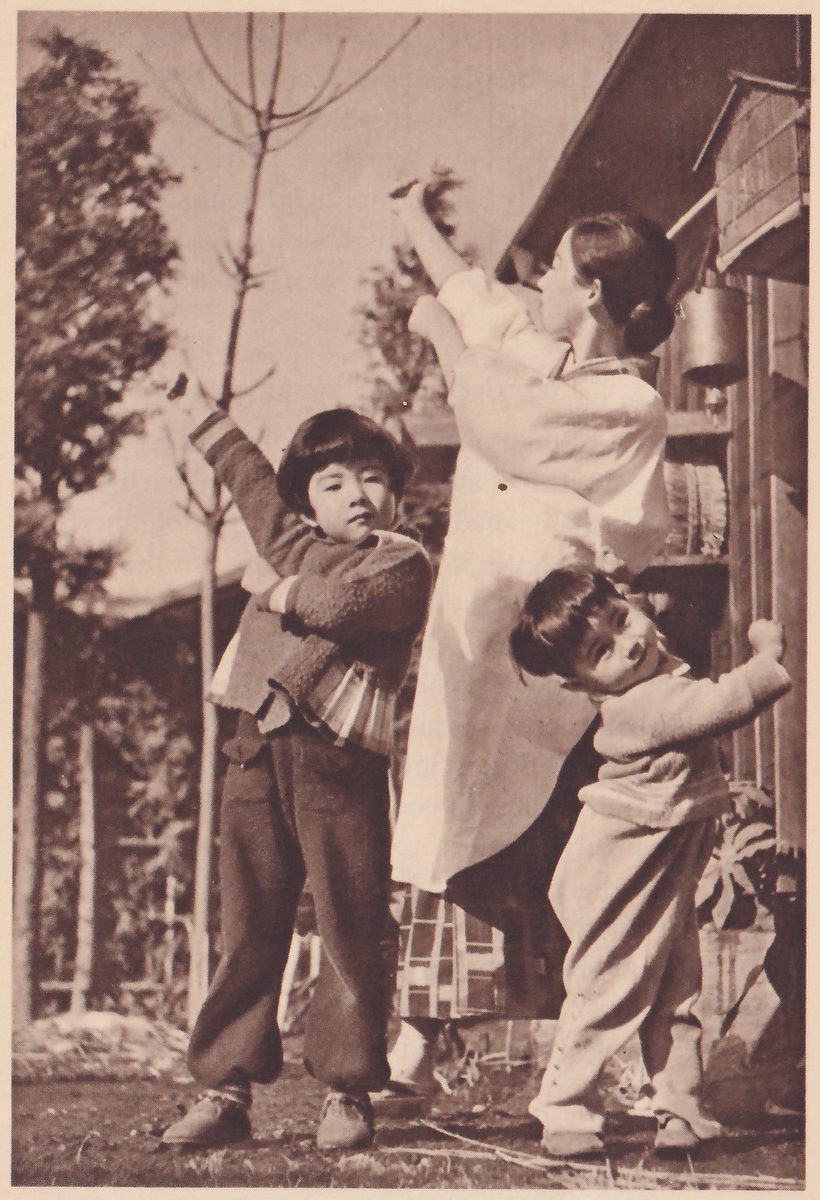
young and old. In short, she is to be humble and modest when young and to be wise and to lead when older—that is all. She was spared the trouble about hunting after sweethearts with a view to marriage. Her parents, her relatives, all her family friends and neighbours did this for her. A good, marriageable daughter was no more to be concealed than a cherry tree in blossom, nor was her nature or character.
Married to the House
The first object of marriage was to stay married, not to get divorced when the couple got tired of each other. Every provision was made to keep the two together, to prevent separation, even if one became tired of the other. Married couples were taught to regard their union as the inevitable dictate of fate, good or bad. You may ask: What if one party was really tired of the other? The answer is that there was no need for one to get really tired of the other. For, if love grew out of marriage, as it generally did, well and good, but if not, no matter, as the wife was married more to the household of the husband than to the husband himself. One of the first and most important functions which the bride, on entering the house of her future husband, performed was to kneel before the family shrine and report, so to speak, to the souls of his ancestors that she had just joined the group, for good or for ill. It was tantamount to saying that she had from now on become an integral part of the house, which was the main thing, and that her new life began therewith in the rôle of wife, which was secondary. So, if the husband did not prove to be as loving as was expected,
she must take him as a necessary evil, like a leaky kettle, and make the most of it, finding solace in the care of her children. On the husband’s part, if he did not find his wife quite to his liking, he could still maintain her in the place of the first woman of the house.
If the husband died, the wife often remained in the house like Ruth, who said to her mother-in-law: “Whither thou goest, I will go, where thou diest, I will die, thy people shall be my people, and thy God my God.” The good fortune which befell Ruth in the end often befell a Japanese widow of old, who, for one reason or another, had led an unhappy married life. Generally speaking, however, the married couple of other days did find their mutual conditions adjusted in due course of time without having recourse to divorce or separation. As the wife grew in years, she increased in influence also, until she became Lady Paramount, thoroughly identified with the name and prestige of the house—a position from which nothing on earth could dislodge her so long as she played her part of the game.
As Grandmother
If bound by the triple-obedience doctrine, the Japanese wife of old was exempted from the burden of compulsory education now borne by girls and boys. Education, in its present conception, was deemed unnecessary for her. She was a regular Joan of Arc who knew how to spin and sew to perfection, but was barely able to read and write the easiest form of script. There were polite accomplishments for women, such as the art of arranging flowers, tea ceremony, composing waka (short poems), but
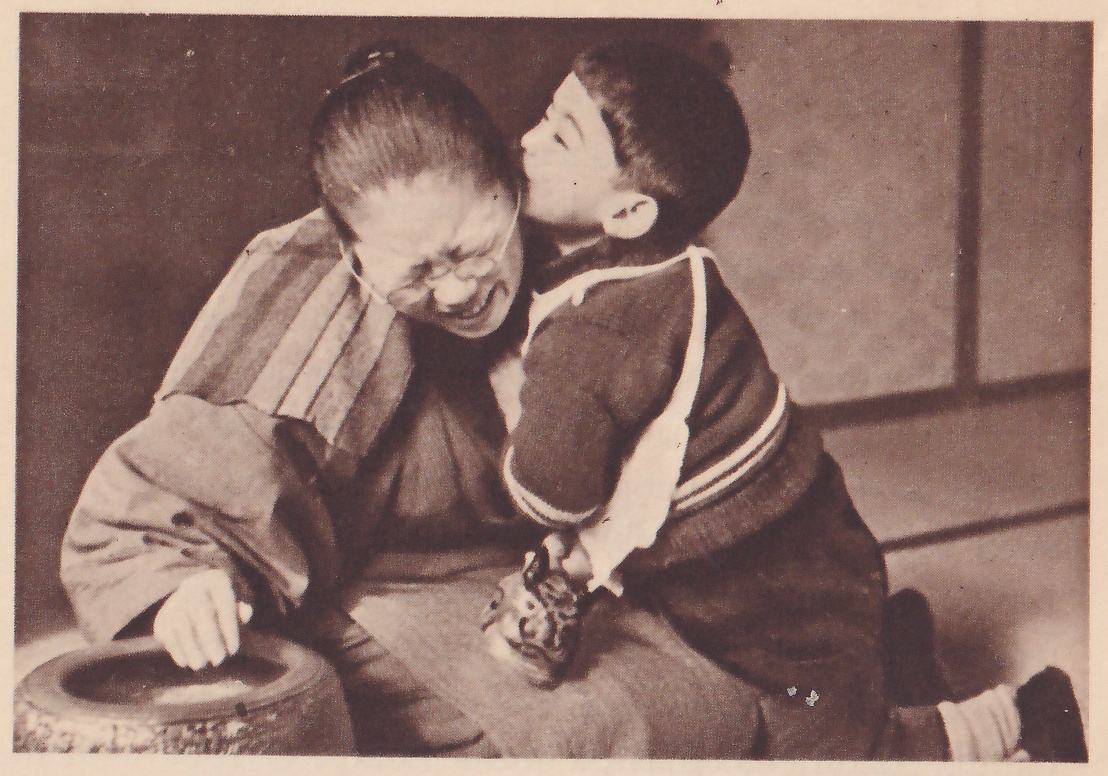
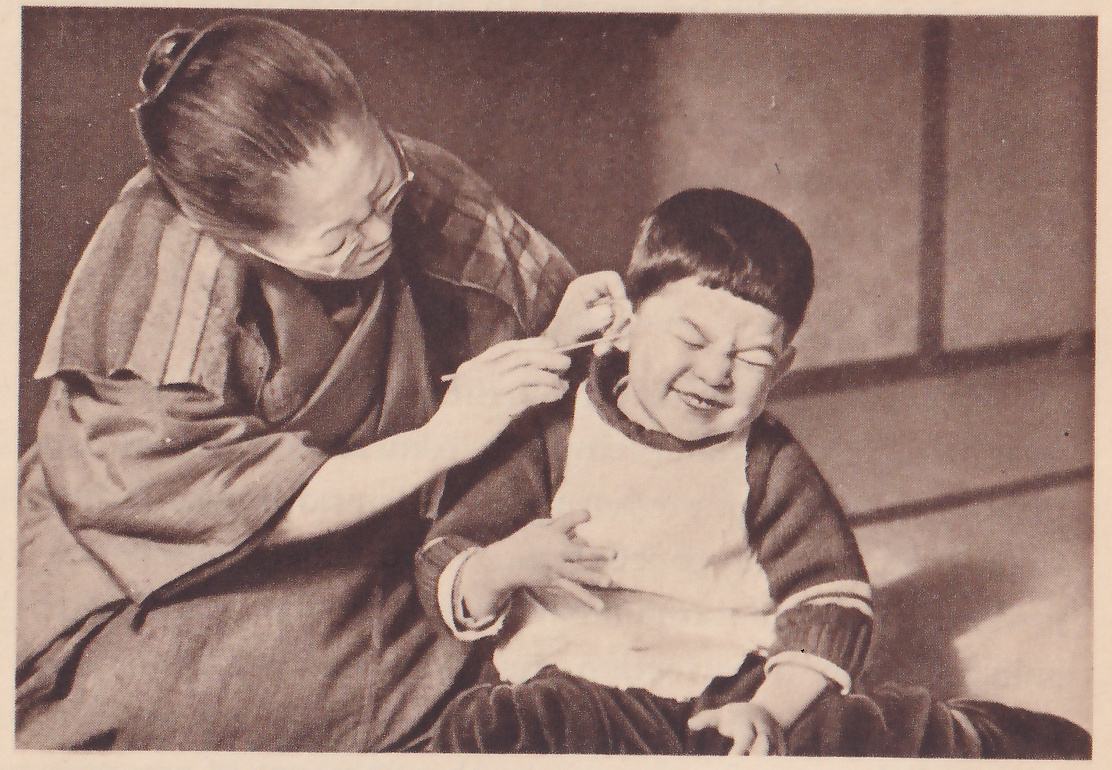
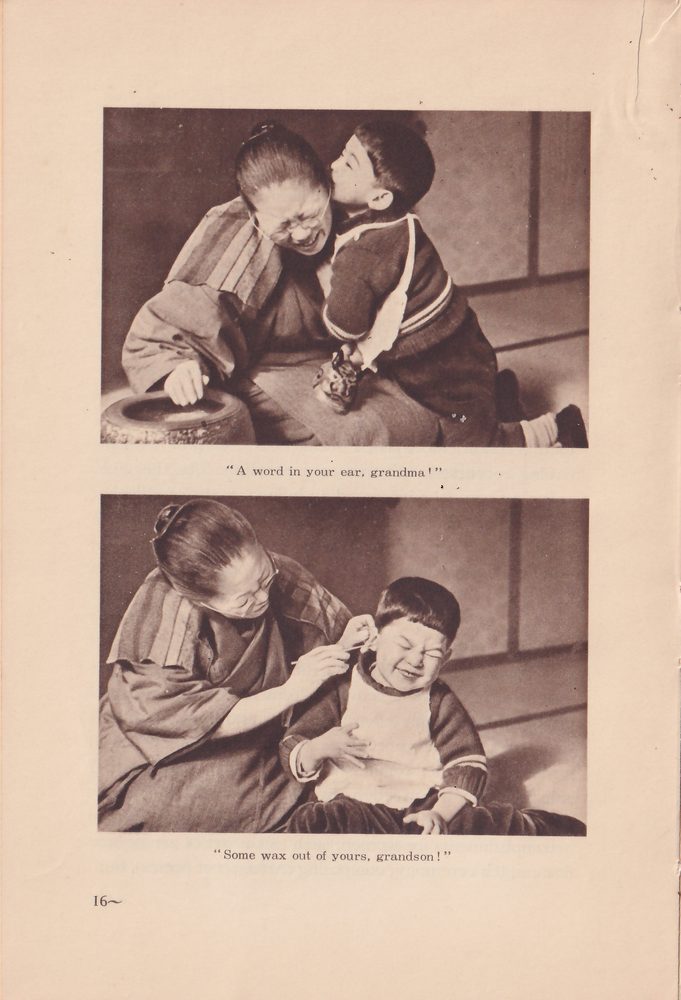
these were cultivated chiefly by daughters of the middle and upper-middle classes, i. e. young ladies. The average woman must depend on her experience, force of character and womanly intuition to prove her mettle as the lifelong partner of her husband and as mistress of the house, and in her age as mother and grandmother of a host of progeny. Such a woman, or the remnants of such, may still be met with everywhere in the Empire. She is the grandmother of the young wife of today, perhaps close on eighty or more, and in some cases still wielding her puissant tongue, helping in the administration of a large home, or even a busy commercial establishment, her tact, vision and knowledge of the world not a whit beclouded. She is the genrō (senior governor) of the house.
The Modern Daughter
But here we are concerned more with the granddaughter than the grandmother. Now listen to our young lady’s complaints and boasts. She has to learn a great deal more than did her grandmother. The world has grown more complex and civilized; women have been made free but self-reliant. Her place in the world is almost equal to that of a boy and she has to adjust herself to her changed or advanced place in the world.
All this is too true. Indeed, she has had to go through the compulsory school education just as does a boy, and then go on with higher education in the Girls’ High School, which once on a time was “advanced” but which now is only part of the education of the average girl, hardly adequate for one whose mission in life is to help one’s husband to get on in the world. No longer is she ex-
pected to become a doll bride. She must be a miracle of self-help and efficiency and, withal, of feminine attractiveness. Adequate as a kitchen maid, delicate as a lady, she must have a steady head for driving bargains and for not being cheated. All of which requires training not only of mind, but a good deal of actual experience. She must digest untold numbers of magazine stories and lectures, read all sorts of literature, current and classical, must go out often, mix with people, male and female, visit shows, cinemas and attend parties, taking in as much knowledge of the world as possible while she is free, unattached.
School for Brides
It is to help young ladies to gain such an outlook on life that the so-called Bride School has come into existence. Its avowed object is to produce an ideal wife—that is, a good wife and a sagacious mother—in whom the pick of qualities making for the best woman of the new and old Japan types shall be combined. The Girls’ High School is thought to fall short of the proper standard, and as for the Girls’ University, it may be considered by some as a little too much of the blue stocking variety, while others may think that such learned ladies are doubtless very suitable in their place, but that their place is not in the home where cooking has to be done and darning of the husband’s stockings ... which are not of the blue-coloured variety. Hence the Bride School. In its curriculum are included nearly all the accomplishments deemed essential to the wife of a superior male and the mistress of an affluent and well-regulated household. Sewing, knitting and cooking, the science of household economy, the art of flower
arrangement, tea ceremony, waka composition, music, dancing and foreign languages are among the lessons included, some of them optional or given to special classes.
You may now form a rough idea of what an ideal Japanese bride must be, or is supposed to be. She has had the benefit of the Girls’ High School as a matter of course, and at the same time some domestic discipline at the hands of her elder relatives, brought up, we shall suppose, in the honourable traditions of an ancient, well-to-do family. To this has been added all that the best of the Bride School could impart, and she stands confessed a marriageable girl in all her bloom and sweetness. She is able to read and write, her handwriting being as beautiful as that of the best-educated male or female, able to talk in company, to give and receive messages by post or telephone in all the transactions of daily life as efficiently as a regular office clerk, able to do book-keeping as well as house-keeping, to decorate the interior of the house, to be an efficient hostess and a graceful guest, and she may embellish her letters, if necessary, with poetic effusions. On top of all this, she has managed to pick up, thanks to the extra tuition of the Bride School, a smattering of a foreign language and the capacity to appreciate foreign music, being no mean dancer herself.
If, with all these accomplishments, she happens to have a pretty face and graceful figure, she is well nigh perfect as a candidate for happy and prosperous matrimony. In age she will be nearer twenty than fifteen, or possibly a little above the twenty line, and this you could hardly have helped, though her grandmother might have hinted that she was getting too old for marriage.