


Eri's Choice · VD5J
Eri's Choice is a design that does not keep strictly to one style; it is Master Takase's own artistic choice.
一粒万倍
ichiryū manbai
One Grain, Ten Thousandfold
Something small that grows very large, as one seed sown comes back as a harvest.
Hand-brushed by Master Eri Takase
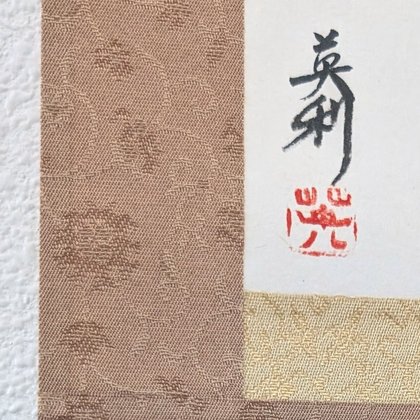
Master Japanese Calligrapher Eri Takase brushes your scroll by hand when you order it. Each scroll bears her red seal, 英利, and her signature.
Eri Takase was born and raised in Osaka, Japan, and holds the rank of Shihan, the highest rank in Japanese calligraphy, from the Bokuteki-kai and the Bunka-shodo.
12 1/4" × 43" Japanese Scroll
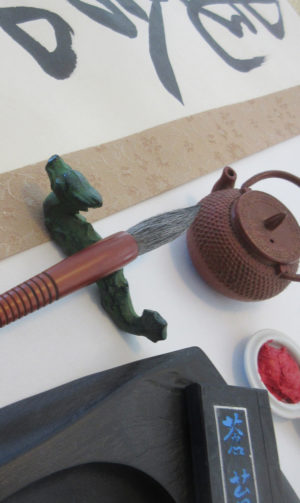
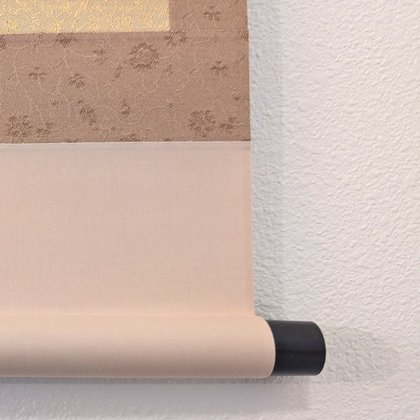
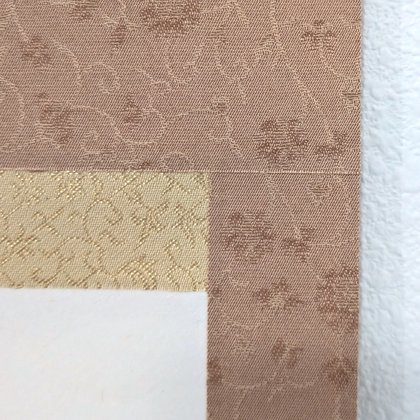
The scrolls are 12 1/4" W × 43" H (31 × 109 cm), with woven damask borders and layered Japanese paper (washi), designed to last generations. The scrolls themselves are made by a scroll maker in Gifu, Japan, and we have worked with them for over two decades.
Ships in 1-3 days from Washington State
Your scroll is brushed when you order it and completed within 1 to 3 business days.
Your scroll ships from Master Takase's studio in Washington State. Shipping is calculated at checkout. We ship worldwide.
Includes detailed explanation, gift-ready
Your scroll arrives boxed, with a printed insert describing the proverb in detail.
Sending it as a gift? Add your message at checkout and we will include it with the insert.
30-day money-back guarantee
Every order is covered by our 30-day money-back guarantee. If your scroll arrives damaged, or we made an error, we replace it or refund you in full, including shipping.
Explanation
一粒万倍 (ichiryū manbai): something small that grows very large, as one seed sown comes back as a harvest.
一粒万倍 says that something small grows very large: one seed sown comes back as ten thousand grains. Four characters make the phrase: 一, one, 粒, grain, 万, ten thousand, and 倍, times. Japanese dictionaries give the phrase a second shade: the feeling that not the least thing may be wasted. The calendar carries a day named for the phrase, held good for beginning things such as opening a shop. Whether you take it as the harvest to come or as the seed not to waste is yours.
The phrase was spoken at the planting of rice fields in the seventeenth century. A guide of 1662 describes the planting of the field of the Sumiyoshi shrine in Osaka. The chief priest comes by carriage to its edge, takes up the sacred wand and prays for one grain ten-thousandfold. A picture book of 1695 shows the planting girls in the field. It says they offer the blessing of one grain ten-thousandfold as they sing. In a comic tale of the 1690s, a farmer reads in the almanac that it is a one-grain-ten-thousandfold day. He sows his beans, and when his neighbor calls out he hushes him, in case the doves hear.
The phrase has also been said of a kindness returned many times over. A dictionary of 1896 gives it in English as ten thousand fold for a grain of rice. In its figurative sense, the dictionary adds, it is a very generous repayment for a small act of kindness. In 1943 Sakurazawa Yukikazu told of an aged Shingon priest he had treated. The priest repaid one cigarette with tobacco by the twenty and thirty: well, they do say one grain ten-thousandfold. Writing in English as Georges Ohsawa, he made the phrase the motto of macrobiotics, one grain, ten thousand grains. The motto has run through that literature since.
The four characters are Japanese: the earliest witness the 日本国語大辞典 gives is the Jesuits' dictionary of spoken Japanese printed in 1603, of a farmer's harvest, and they stand together in no Chinese text in the CBETA canon or Chinese Wikisource; behind them stand older images of the same yield, the Buddhist canon's seed that returns a gift ten-thousandfold, the Tang poet Li Shen's single grain of millet, and a farmer of Heian Kyoto who sows one grain in spring and stores ten thousand in autumn, while the sutra the dictionaries name as the source has the sowing and the ten-thousandfold but not the phrase.
Learn More About This Proverb
We want you to be as happy with the meaning as you are with Master Takase's art. To learn more, visit Philology of 一粒万倍.


