



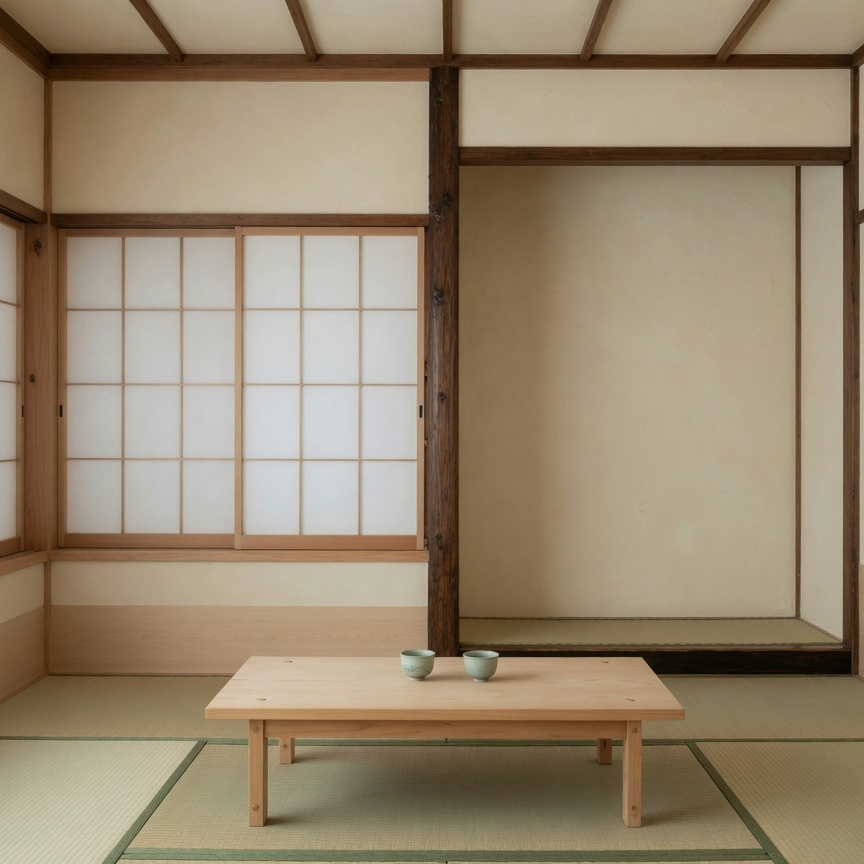
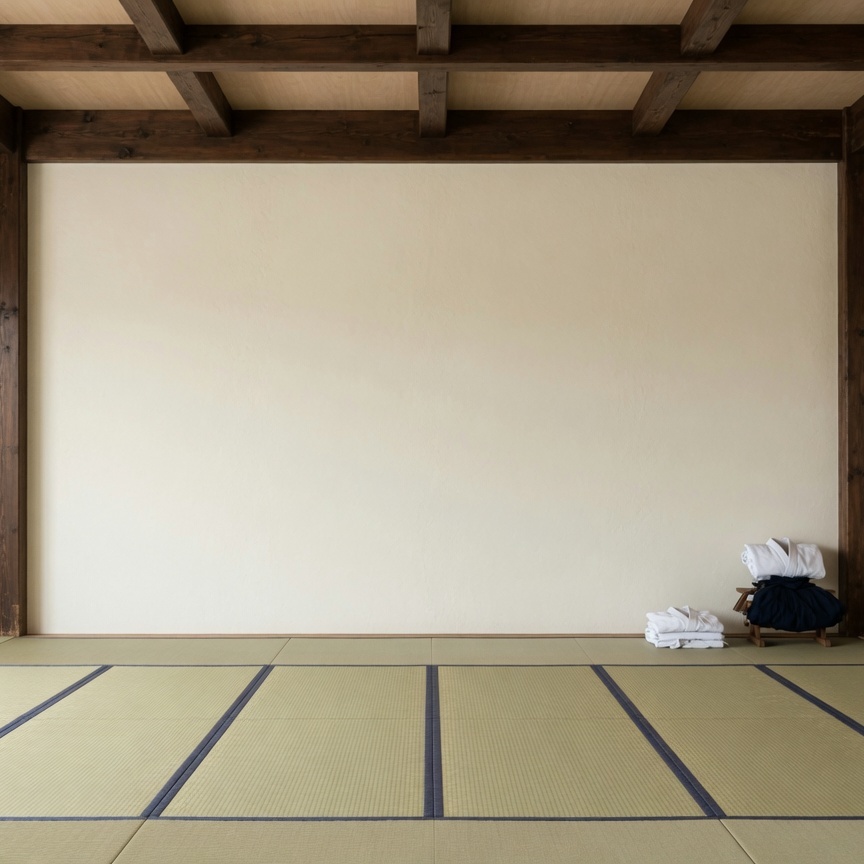
Jiun · 自運 · VD6B
Jiun (自運) is the calligrapher's word for writing from one's own invention. As a Shihan, Master Takase has a hand of her own, and these designs are that hand: she draws freely on the classic scripts to create exactly the look she wants.
蜻蛉釣り
今日はどこまで
行ったやら
tonbo-tsuri
kyō wa doko made
itta yara
chiyojo 千代女
My little dragonfly hunter,
where has he gone today,
I wonder
Off catching dragonflies; how far did he get today, I wonder.
Master Takase creates this beautiful scroll when your order is placed, personally preparing the ink and brushing your art, which proudly bears her signature and seal. This is an original work of art.
Description
My little dragonfly hunter,
where has he gone today,
I wonder [1]
|
tonbo-tsuri kyō wa doko made itta yara |
蜻蛉釣り 今日はどこまで 行ったやら |
| chiyojo | 千代女 |
蜻蛉釣り今日はどこまで行ったやら (tonbo-tsuri kyō wa doko made itta yara): off catching dragonflies; how far did he get today, I wonder.
The verse given to Kaga no Chiyo is what a parent says at dusk with a child not yet home. The child is out at a game, and the question stops there. A book printed long after her death says she wrote it when her child died, and readers have heard that grief in it since. The Japanese references hold the story as legend. The grief readers hear is real, and the verse keeps it in the pause after the question.
In the Japanese, 蜻蛉釣り, tonbo-tsuri, is the children's game of catching dragonflies, a season word for autumn. The game was played with a decoy on a thread or a pole tipped with birdlime. 今日は is today. どこまで is how far, and 行った is went. やら is the particle of wondering aloud, and I wonder is its exact English. None of the words says my, little, son or death. Two of the hands write 蜻蛉 in kana, as とんぼ, and one of them also writes 今日 as きょう.
The English is Timothy L. Jackowski's, made for Takase Studios.
Translations of this poem tend to be either too literal or too detached. The last two lines are a single sentence that is simply spoken words - words you could imagine any mother muttering to herself a thousand times: "I wonder where he has gone today?" I think this is important to preserve in the translation and that it is essential to the beauty of the poem.
Chiyojo must have felt this a hundred times when her son was alive - that of simple motherly concern that her little boy was out somewhere, she didn't know exactly where, out hunting dragonflies. Indeed, the poem stops with the simple expression of concern on where he might have gotten off to. What is left unsaid is the moment after, when the reality bites. In my opinion, she is capturing two things: the first is the obvious pride and seriousness that her boy felt for dragonfly hunting and the second is the concern she felt when he was outside and she would worry until he was again safely home.
What is left unsaid by the poem is the instant after. When she realized all of this was gone.
In my opinion, in this poem, Chiyojo is a mother, not a philosopher.
Calligraphy Notes:
1) For the designs I used hiragana for Dragonfly (tonbo). This is a very feminine poem and I think the cursive, and more so the designed cursive using hentaigana convey the emotions.
Translation Notes:
蜻蛉釣り
今日はどこまで
行ったやら1) 蜻蛉釣り (tonbo tsuri) - composed of 蜻蛉 (tonbo) meaning "dragonfly" and 釣り (tsuri) meaning "fishing; angling". So the term literally means "Dragonfly fishing".
Today we use the expression "tonbo tori" catching dragonflies with a net. But the game in the poem was played with a decoy dragonfly tied by a thread to a pole, or with a pole tipped with birdlime, and that is much more like fishing - so "tsuri" was used rather than "tori".
Lafcadio Hearn discusses this a bit on page 118 of A Japanese Miscellany (full text available online). This is a great read - did you know Japan use to be known as Akitsushima and was written with the kanji literally meaning "Island of the Dragonfly"? Akitsu being an ancient word for "dragonfly". The version in the dictionary has the same pronunciation, but different kanji ... too bad.
Notice that dragonfly is written in romaji as both tombo and tonbo. Technically Japanese does not have a single character "m" only an "n", but in this situation the "n" is often pronounced like an "m" and so the romaji reflects this. A dictionary would use tonbo.
Finally the "My Little" is not in the original Japanese. Chiyojo is talking about her little boy and this sentiment fits the poem. A more direct translation would be:
Dragonfly hunter.
I wonder where he is
off to today.2) 今日 (kyou) - means "today; this day".
3) は (wa) - Written as "ha" but it is read as wa. This states "today" as the topic.
4) どこまで (dokomade) - "how far; to what extent".
5) 行った (itta) - past tense of the verb 行く (iku) meaning "to go".
6) やら (yara) - yara is a particle denoting uncertainty. I think the translation of "I wonder" fits this well.
References:
[1] Translation by Timothy L. Jackowski, Takase Studios, LLC.
We want you to be as happy with the meaning as you are with Master Takase's art. To learn more, visit Philology of 蜻蛉釣り今日はどこまで行ったやら.
Delivery
Your scroll is brushed when you order it and completed within 1 to 3 business days. It ships by USPS Priority Mail from Master Takase's studio in Washington State, boxed and ready to hang, with a printed page giving the art's English, romaji and Japanese.
Sending it as a gift? Add your message at checkout and we will include it.
Shipping is calculated at checkout from your address; within the United States it is $13 to $23. We ship worldwide, and any import charges for your country are shown at checkout before you pay.
Every order is covered by our 30-day money-back guarantee. If your scroll arrives damaged, or we made an error, we replace it or refund you in full, including shipping. Refund policy
About Our Scrolls
Master Japanese Calligrapher Eri Takase brushes your scroll by hand when you order it. Each scroll bears her red seal, 英利, and her signature.
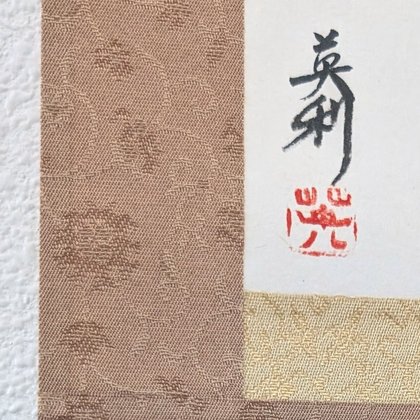
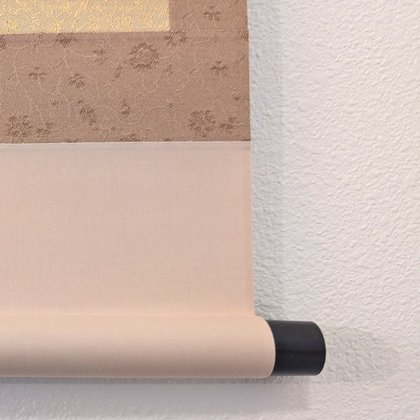
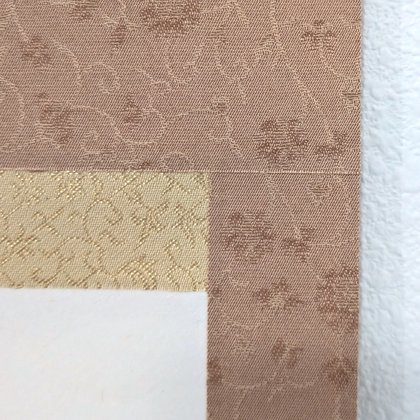
The scrolls are 12 1/4" W × 43" H (31 × 109 cm), with woven damask borders and layered Japanese paper, designed to last generations. The scrolls themselves are made by a scroll maker in Gifu, Japan, and we have worked with them for over two decades.
Eri Takase was born and raised in Osaka, Japan, and holds the rank of Shihan, the highest rank in Japanese calligraphy, from the Bokuteki-kai and the Bunka-shodo. About Master Takase
Related products

Chiyojo - The morning glory has taken the well bucket, so I borrow water朝顔に釣瓶とられてもらい水asagao ni tsurube torarete moraimizu

Chiyojo - To the person breaking off the branch, giving its fragrance, the plum blossom手折らるゝ人に薫るや梅の花taoraruru hito ni kaoru ya ume no hana

Issa - This dewdrop world, is a dewdrop world, and yet露の世は露の世ながらさりながらtsuyu no yo wa tsuyu no yo nagara sari nagara
