

Trust in God: Jesus's words at Mark 11:22, as the Meiji New Testament gives them.
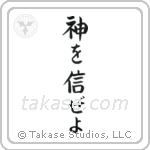
Trust in God
神を信ぜよ
kami o shinzeyo
Vertical Block VB3C
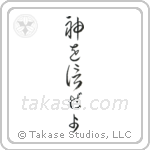
Trust in God
神を信ぜよ
kami o shinzeyo
Vertical Cursive VC3B
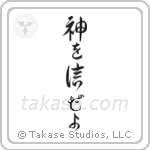
Trust in God
神を信ぜよ
kami o shinzeyo
Vertical Jiun VD7B
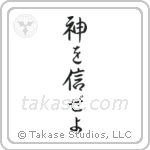
Trust in God
神を信ぜよ
kami o shinzeyo
Vertical Semi-Cursive VS3C
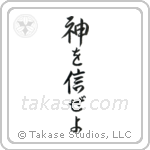
Trust in God
神を信ぜよ
kami o shinzeyo
Vertical Semi-Cursive VS3D
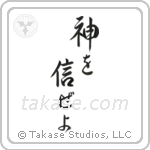
Trust in God
神を信ぜよ
kami o shinzeyo
Vertical Semi-Cursive VS5C
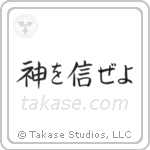
Trust in God
神を信ぜよ
kami o shinzeyo
Horizontal Block HB3A
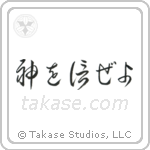
Trust in God
神を信ぜよ
kami o shinzeyo
Horizontal Cursive HC3A
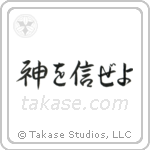
Trust in God
神を信ぜよ
kami o shinzeyo
Horizontal Semi-Cursive HS3A
