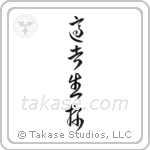
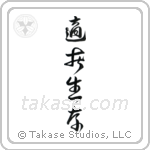
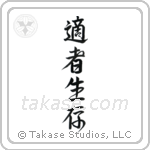
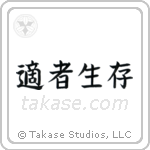
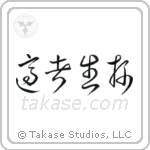
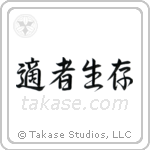
適者生存 (tekisha seizon): survival of the fittest, the one suited to its surroundings is the one that lives. 適 means
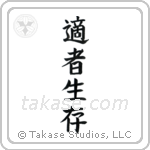
suited, and nothing in it means strong; 者 is the one; 生存 is to stay alive. The English phrase is Herbert Spencer's, from
The Principles of Biology of 1864, and Darwin borrowed it in 1869, calling it more accurate than natural selection. The Japanese word is Meiji, made in the same rooms as 生存競争, the struggle for existence, and 自然淘汰, natural selection. The philosophical vocabulary compiled at Tokyo University in 1881 first rendered the phrase 適種生存,
the fit species survive. In 1883 the zoologist 石川千代松 published the lectures he had heard Edward S. Morse give on Darwin, and opened them with the word as the scroll has it, one character changed: the fit
one. A rival with the superlative, 最適者生存, was the choice of both Meiji translations of the
Origin and lost; the National Diet Library holds 2,739 books with the scroll's form against 35. The word went on from Japan into Chinese, first in an essay 梁啓超 wrote in Tokyo in 1902, and by 1924 it was 孫文's. The scroll brushes the form that won. It is not 弱肉強食, the strong eating the weak: what the phrase says is that the surroundings decide. 適者生存 is composed of the words
適者 (read tekisha) meaning "the fit" and
生存 (read seizon) meaning "survive" or "exist".