

Smooth sailing, a fair wind and a full sail, the state of things going as well as they can.
順風満帆 is a four-kanji word in the Japanese dictionaries: fair wind, full sail, everything going smoothly. Worn as a tattoo, it is a wish for a life that sails well.
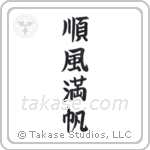
Smooth Sailing
順風満帆
junpū manpan
Vertical Block VB3C
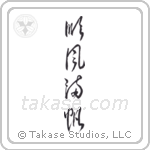
Smooth Sailing
順風満帆
junpū manpan
Vertical Cursive VC3B
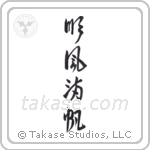
Smooth Sailing
順風満帆
junpū manpan
Vertical Jiun VD3B
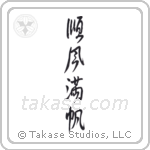
Smooth Sailing
順風満帆
junpū manpan
Vertical Jiun VD3C
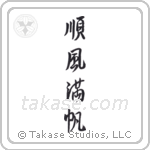
Smooth Sailing
順風満帆
junpū manpan
Vertical Semi-Cursive VS3C
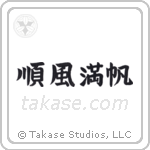
Smooth Sailing
順風満帆
junpū manpan
Horizontal Block HB3A
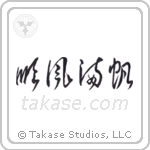
Smooth Sailing
順風満帆
junpū manpan
Horizontal Cursive HC2A
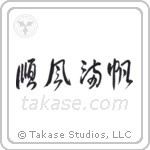
Smooth Sailing
順風満帆
junpū manpan
Horizontal Jiun HD2A
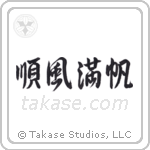
Smooth Sailing
順風満帆
junpū manpan
Horizontal Semi-Cursive HS2A
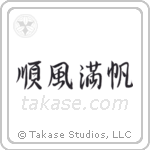
Smooth Sailing
順風満帆
junpū manpan
Horizontal Semi-Cursive HS3A
