

Three thousand haiku looked through, and two persimmons.
三千の俳句を閲し柿二つ (sanzen no haiku o kemishi kaki futatsu): three thousand haiku looked through, and two persimmons. 閲し is 閲する, to look through, the selector's verb; Masaoka Shiki read the verses sent to the newspaper 日本 by the box, and 柿, the persimmon, is the fruit that returns through his poems. The verse carries a headnote of Shiki's own: 或日夜にかけて俳句凾の底を叩きて, one day, on into the night, striking the bottom of the haiku box. That is the whole story: the box emptied, and at the end of it the reward a sick man allows himself. Kyoshi later gave the night a fever in his novel 柿二つ, though his own later tellings leave it out; the retellings that follow the novel keep it. The verse does not need it. Watson's English keeps the headnote as its title; Blyth's puts the count first and the persimmons last with nothing between them but the verb. The English is Timothy L. Jackowski's, made for Takase Studios.
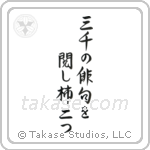
Shiki - Three thousand, Haiku to examine, Two persimmons
三千の俳句を閲し柿二つ
sanzen no haiku o kemishi kaki futatsu
Vertical Block VB6C
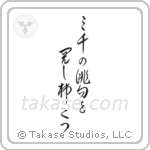
Shiki - Three thousand, Haiku to examine, Two persimmons
三千の俳句を閲し柿二つ
sanzen no haiku o kemishi kaki futatsu
Vertical Cursive VC6B
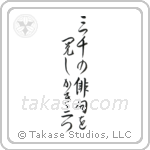
Shiki - Three thousand, Haiku to examine, Two persimmons
三千の俳句を閲し柿二つ
sanzen no haiku o kemishi kaki futatsu
Vertical Jiun VD5B
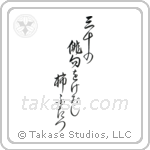
Shiki - Three thousand, Haiku to examine, Two persimmons
三千の俳句を閲し柿二つ
sanzen no haiku o kemishi kaki futatsu
Vertical Jiun VD6B
