

What the thief left behind, the moon in the window.
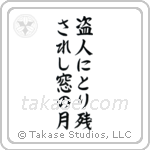
Ryōkan - The thief, left behind, the moon in my window
盗人にとり残されし窓の月
nusubito ni torinokosareshi mado no tsuki
Vertical Block VB5C

Ryōkan - The thief, left behind, the moon in my window
盗人にとり残されし窓の月
nusubito ni torinokosareshi mado no tsuki
Vertical Cursive VC5B

Ryōkan - The thief, left behind, the moon in my window
盗人にとり残されし窓の月
nusubito ni torinokosareshi mado no tsuki
Vertical Jiun VD5B

Ryōkan - The thief, left behind, the moon in my window
盗人にとり残されし窓の月
nusubito ni torinokosareshi mado no tsuki
Vertical Jiun VD6B
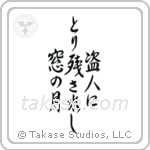
Ryōkan - The thief, left behind, the moon in my window
盗人にとり残されし窓の月
nusubito ni torinokosareshi mado no tsuki
Vertical Semi-Cursive VS5C

Ryōkan - The thief, left behind, the moon in my window
盗人にとり残されし窓の月
nusubito ni torinokosareshi mado no tsuki
Vertical Semi-Cursive VS5D
