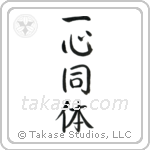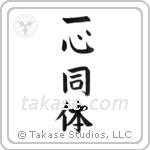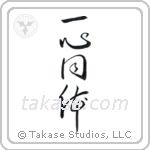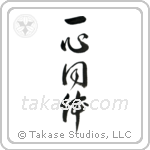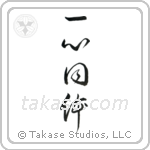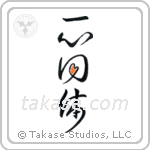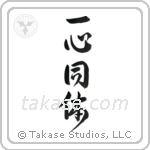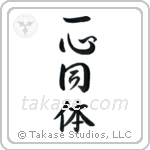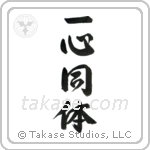

一心同体 (isshin dōtai): one heart, one body; two people acting as one. 一心 is one heart, the single mind of a person at prayer; 同体 is one body, a Buddhist word for the single body of the Buddhas. Every Japanese dictionary now illustrates the phrase with the same sentence,
husband and wife are one heart and one body, as if it had always belonged to the couple. It had not. The phrase is Chinese, and in China it named a brotherhood: in the
Journey to the West, master and disciples go on toward the West
one heart and one body, and the oath of a secret society told its initiates to be of one heart and one body and allow no distinction of you and me. Japan took it up in the 1870s for its own new bodies of men: the Tokyo police were told to consider those on duty together one heart and one body, a memorial for the volunteers who died in Taiwan used it of the company, and a translator used it for Rousseau's single body of the social contract. It came to the couple through the church. A catechism on the sacrament of marriage was the first to say it of husband and wife, the novels and the conduct books followed, and by the end of the Meiji era an idiom dictionary was giving
she and I are one flesh as its English, which the dictionaries have kept ever since.
One in Mind and Body renders the parts;
of one flesh is what a Japanese reader hears. The older Japanese word for a couple, 異体同心, is Nichiren's,
bodies apart, one heart; this one says the opposite and means the same. 一心同体 is composed of the words
一心 (read isshin) meaning "one heart, one mind" and
同体 (read dōtai) meaning "one body".