

Not knowing is most intimate: a Zen master's answer to a young monk who had just said I don't know.
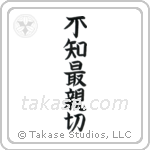
Not Knowing is Most Intimate
不知最親切
fuchi mottomo shinsetsu
Vertical Block VB5C
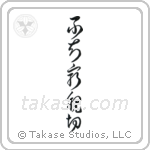
Not Knowing is Most Intimate
不知最親切
fuchi mottomo shinsetsu
Vertical Cursive VC5B
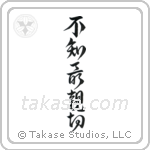
Not Knowing is Most Intimate
不知最親切
fuchi mottomo shinsetsu
Vertical Jiun VD5B
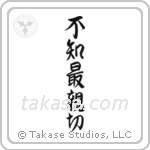
Not Knowing is Most Intimate
不知最親切
fuchi mottomo shinsetsu
Vertical Semi-Cursive VS5C
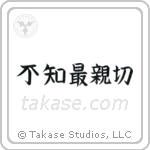
Not Knowing is Most Intimate
不知最親切
fuchi mottomo shinsetsu
Horizontal Block HB5A
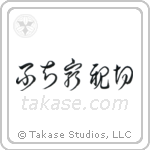
Not Knowing is Most Intimate
不知最親切
fuchi mottomo shinsetsu
Horizontal Cursive HC4A
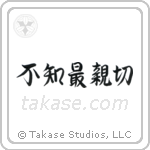
Not Knowing is Most Intimate
不知最親切
fuchi mottomo shinsetsu
Horizontal Semi-Cursive HS5A
