

Devotion to the Lotus Sutra.
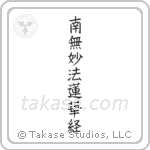
Nam Myōhō Renge Kyō
南無妙法蓮華経
namu myōhō renge kyō
Vertical Block VB5C
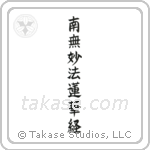
Nam Myōhō Renge Kyō
南無妙法蓮華経
namu myōhō renge kyō
Vertical Block VB6C
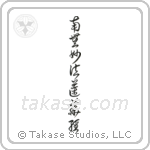
Nam Myōhō Renge Kyō
南無妙法蓮華経
namu myōhō renge kyō
Vertical Cursive VC6B
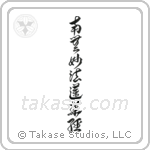
Nam Myōhō Renge Kyō
南無妙法蓮華経
namu myōhō renge kyō
Vertical Cursive VC7B
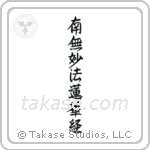
Nam Myōhō Renge Kyō
南無妙法蓮華経
namu myōhō renge kyō
Vertical Jiun VD6B
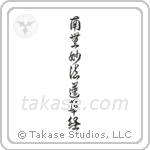
Nam Myōhō Renge Kyō
南無妙法蓮華経
namu myōhō renge kyō
Vertical Jiun VD7B
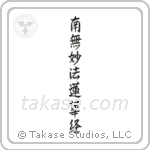
Nam Myōhō Renge Kyō
南無妙法蓮華経
namu myōhō renge kyō
Vertical Semi-Cursive VS6C
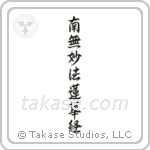
Nam Myōhō Renge Kyō
南無妙法蓮華経
namu myōhō renge kyō
Vertical Semi-Cursive VS6D
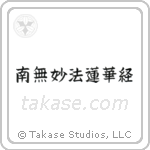
Nam Myōhō Renge Kyō
南無妙法蓮華経
namu myōhō renge kyō
Horizontal Block HB6A
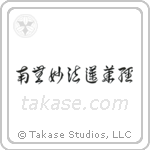
Nam Myōhō Renge Kyō
南無妙法蓮華経
namu myōhō renge kyō
Horizontal Cursive HC6A
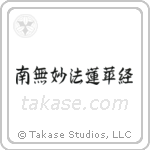
Nam Myōhō Renge Kyō
南無妙法蓮華経
namu myōhō renge kyō
Horizontal Jiun HD6A
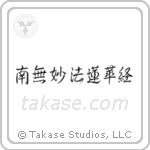
Nam Myōhō Renge Kyō
南無妙法蓮華経
namu myōhō renge kyō
Horizontal Semi-Cursive HS6A
