

Live long and prosper: the Vulcan blessing, in a Japanese that was a Japanese wish first.
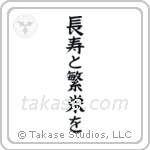
Live Long And Prosper
長寿と繁栄を
chōju to han'ei o
Vertical Block VB6C
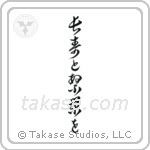
Live Long And Prosper
長寿と繁栄を
chōju to han'ei o
Vertical Cursive VC6B
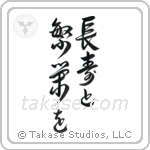
Live Long And Prosper
長寿と繁栄を
chōju to han'ei o
Vertical Jiun VD5B
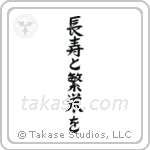
Live Long And Prosper
長寿と繁栄を
chōju to han'ei o
Vertical Semi-Cursive VS6C
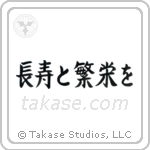
Live Long And Prosper
長寿と繁栄を
chōju to han'ei o
Horizontal Block HB4A
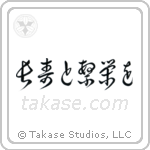
Live Long And Prosper
長寿と繁栄を
chōju to han'ei o
Horizontal Cursive HC4A
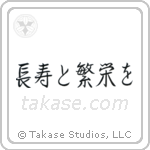
Live Long And Prosper
長寿と繁栄を
chōju to han'ei o
Horizontal Semi-Cursive HS4A
