

Like father, like daughter, and in Japanese the likeness is praise.
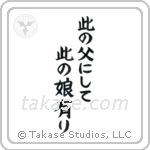
Like Father, Like Daughter
此の父にして此の娘有り
kono chichi ni shite kono musume ari
Vertical Block VB4C
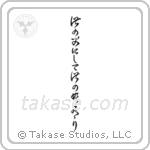
Like Father, Like Daughter
此の父にして此の娘有り
kono chichi ni shite kono musume ari
Vertical Cursive VC6B
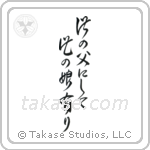
Like Father, Like Daughter
此の父にして此の娘有り
kono chichi ni shite kono musume ari
Vertical Jiun VD5B
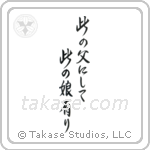
Like Father, Like Daughter
此の父にして此の娘有り
kono chichi ni shite kono musume ari
Vertical Semi-Cursive VS4C
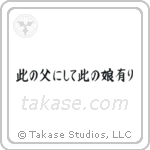
Like Father, Like Daughter
此の父にして此の娘有り
kono chichi ni shite kono musume ari
Horizontal Block HB6A
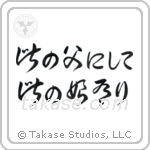
Like Father, Like Daughter
此の父にして此の娘有り
kono chichi ni shite kono musume ari
Horizontal Cursive HC3A
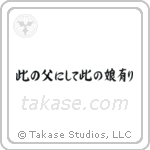
Like Father, Like Daughter
此の父にして此の娘有り
kono chichi ni shite kono musume ari
Horizontal Semi-Cursive HS6A
