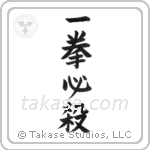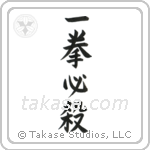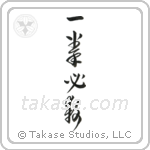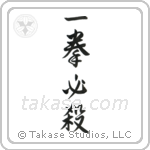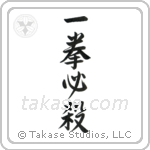

一拳必殺, read
ikken hissatsu: one fist, certain kill. The four characters name the karate ideal of the single decisive technique, the whole self committed to one blow, and the spirit that trains for it. The teacher who gave the phrase to English, Nakayama Masatoshi, wrote in 1978 that to assume from
kill with one blow that killing is the objective is dangerous; the aim is to finish in the shortest time with one decisive technique, and Kanazawa Hirokazu added that one attack is usually not enough against an equal, which is why one trains for the one that is. The phrase is younger than it sounds. Its Japanese form, 一撃必殺
ichigeki hissatsu, entered print in 1941 in the wartime schools and the army's short sword course, and postwar karate made it its own. This form, with the fist named, has a single Japanese witness, an essay of 1942, and lives in English:
ikken hissatsu is the romaji of the Shōtōkan books since 1977, known by ear to every student of that line abroad, and a student who trains in that line will want this form and should have it, told plainly that it is the karate world's. The English title is Nakayama's 1977 gloss. The sniper's
one shot, one kill is a fair comparison and no ancestor. The Japanese phrase 一拳必殺 is composed of the
kanji 一 (read ichi) meaning "one",
拳 (read ken) meaning "fist", and the word
必殺 (read hissatsu) meaning "certain kill".