

Empty hand: the name of the martial art, in the spelling used today.
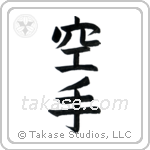
Karate - Empty Hand
空手
karate
Vertical Block VB2C
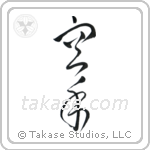
Karate - Empty Hand
空手
karate
Vertical Cursive VC3B
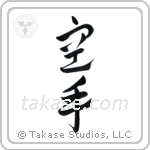
Karate - Empty Hand
空手
karate
Vertical Jiun VD3B
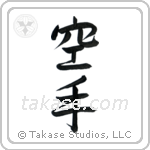
Karate - Empty Hand
空手
karate
Vertical Semi-Cursive VS3C
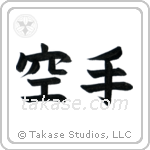
Karate - Empty Hand
空手
karate
Horizontal Block HB2A
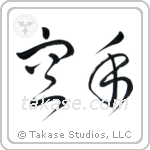
Karate - Empty Hand
空手
karate
Horizontal Cursive HC2A
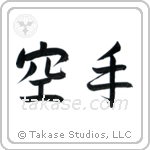
Karate - Empty Hand
空手
karate
Horizontal Semi-Cursive HS2A
![Japanese Scroll of Karate [Empty Hand] (karate) — Calligraphy by Eri Takase](/static/images/shop/scrolls/martial-arts/M1030SSVD3A-japanese-scroll-karate-empty-hand-karate-by-eri-takase.6fc219b9a658dafa.webp)