

Form and shadow as one; two that go together.
形影一如 is a four-character word, rare in print, for two that go together as a body and its shadow. Worn as a tattoo, it speaks of someone who goes with you as your shadow does: a friend, a brother, a partner.
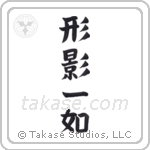
Inseparable as Form and Shadow
形影一如
keiei ichinyo
Vertical Block VB2C
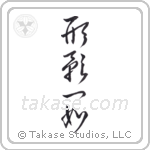
Inseparable as Form and Shadow
形影一如
keiei ichinyo
Vertical Cursive VC3B
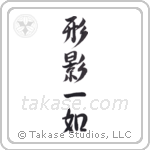
Inseparable as Form and Shadow
形影一如
keiei ichinyo
Vertical Jiun VD2B
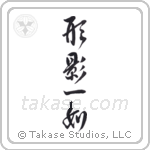
Inseparable as Form and Shadow
形影一如
keiei ichinyo
Vertical Semi-Cursive VS3C
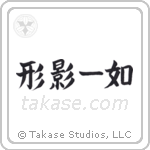
Inseparable as Form and Shadow
形影一如
keiei ichinyo
Horizontal Block HB2A
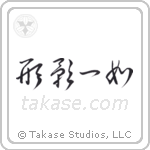
Inseparable as Form and Shadow
形影一如
keiei ichinyo
Horizontal Cursive HC3A
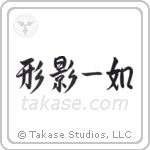
Inseparable as Form and Shadow
形影一如
keiei ichinyo
Horizontal Jiun HD3A
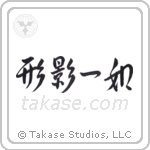
Inseparable as Form and Shadow
形影一如
keiei ichinyo
Horizontal Semi-Cursive HS2A
