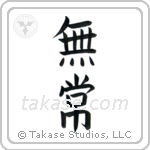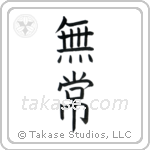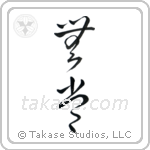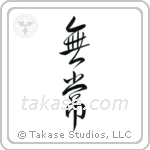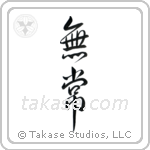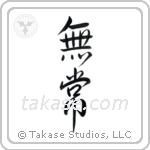

The Japanese word 儚い meaning "Impermanence" translates as "fleeting; transient; short-lived".
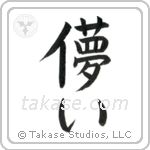
Impermanence
儚い
hakanai
Vertical Block VB2C
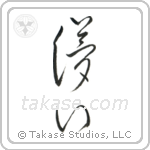
Impermanence
儚い
hakanai
Vertical Cursive VC2B
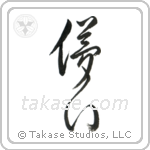
Impermanence
儚い
hakanai
Vertical Cursive VC2C
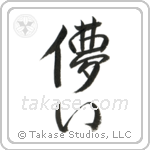
Impermanence
儚い
hakanai
Vertical Semi-Cursive VS2C
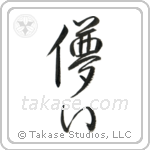
Impermanence
儚い
hakanai
Vertical Semi-Cursive VS2D
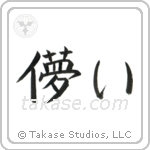
Impermanence
儚い
hakanai
Horizontal Block HB2A
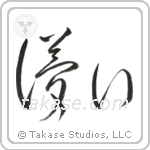
Impermanence
儚い
hakanai
Horizontal Cursive HC2A
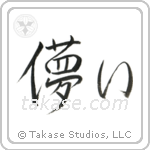
Impermanence
儚い
hakanai
Horizontal Semi-Cursive HS2A