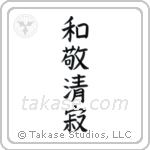
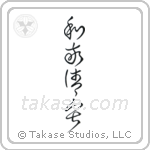
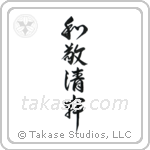
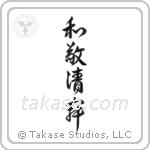
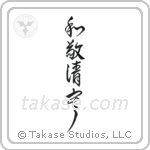
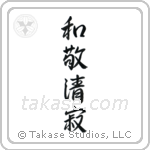
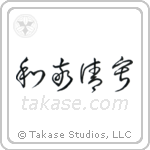
和敬清寂 (wakei seijaku)
和敬清寂, read wakei seijaku: harmony, respect, purity, tranquility. Four characters, four virtues of the tea gathering: the first two are how host and guest are to be with each other, the last two how the room, the garden and the utensils are to be. The tea houses have attributed them to Sen Rikyū since 1699, when a Zen abbot's life of the founders of tea set them down as Rikyū's rewording of four exclamations by Murata Jukō, made in answer to a shogun who worried that a warrior could not bring his sword into the tea room: leave self and other outside, and from these four the peace of the realm follows. No text of Rikyū's own carries them, and historians call the story a tradition of his hundredth memorial; what the tradition has kept is the sense, unchanged in three centuries. A later spelling with stillness in place of purity was rejected by a Meiji tea master because a virtue cannot be listed twice, so the 清 Eri brushes is the right character. The English words are Urasenke's, given by its grand master Sen Sōshitsu, and they are the ones on this page. 和敬清寂 consists of the kanji 和 (read wa) meaning "Harmony", 敬 (read kei) meaning "Respect", 清 (read sei) meaning "Purity", and 寂 (read jaku) meaning "Tranquility".
This is a very popular phrase and this art makes an excellent gift especially for a Japanese Tea Ceremony enthusiast, Bonsai artist or Ikebana artist.
Verify: 和敬清寂 in the Japanese-English Dictionary
Couldn't add to cart. Please try again.