

In what I do, I do not regret: the sixth of the twenty-one first-person articles of Miyamoto Musashi's Dokkōdō, The Way Walked Alone.
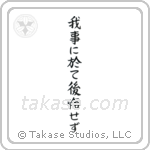
Do not regret what you have done
我事に於て後悔せず
ware koto ni oite kōkai sezu
Vertical Block VB6C
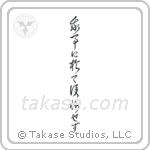
Do not regret what you have done
我事に於て後悔せず
ware koto ni oite kōkai sezu
Vertical Cursive VC6B
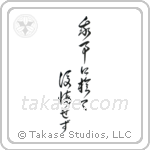
Do not regret what you have done
我事に於て後悔せず
ware koto ni oite kōkai sezu
Vertical Cursive VC6C
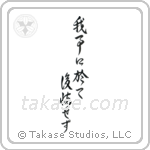
Do not regret what you have done
我事に於て後悔せず
ware koto ni oite kōkai sezu
Vertical Jiun VD6B
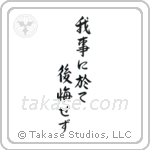
Do not regret what you have done
我事に於て後悔せず
ware koto ni oite kōkai sezu
Vertical Semi-Cursive VS6C
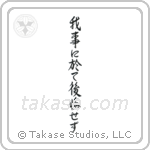
Do not regret what you have done
我事に於て後悔せず
ware koto ni oite kōkai sezu
Vertical Semi-Cursive VS6D
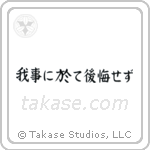
Do not regret what you have done
我事に於て後悔せず
ware koto ni oite kōkai sezu
Horizontal Block HB6A
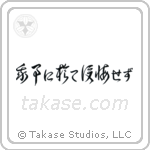
Do not regret what you have done
我事に於て後悔せず
ware koto ni oite kōkai sezu
Horizontal Cursive HC7A
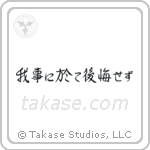
Do not regret what you have done
我事に於て後悔せず
ware koto ni oite kōkai sezu
Horizontal Semi-Cursive HS6A
