

Life and death have their allotted span; wealth and rank rest with Heaven: a saying from the Analects, quoted there by Confucius's disciple Zixia.
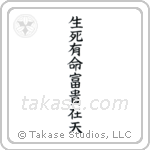
Death and life have their determined appointments - Riches and honors depend upon heaven
生死有命富貴在天
seishi mei ari, fūki ten ni ari
Vertical Block VB5C
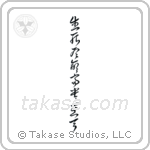
Death and life have their determined appointments - Riches and honors depend upon heaven
生死有命富貴在天
seishi mei ari, fūki ten ni ari
Vertical Cursive VC6B
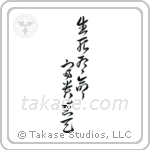
Death and life have their determined appointments - Riches and honors depend upon heaven
生死有命富貴在天
seishi mei ari, fūki ten ni ari
Vertical Cursive VC7B
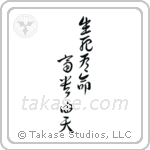
Death and life have their determined appointments - Riches and honors depend upon heaven
生死有命富貴在天
seishi mei ari, fūki ten ni ari
Vertical Jiun VD6B
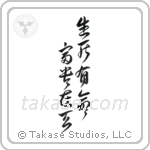
Death and life have their determined appointments - Riches and honors depend upon heaven
生死有命富貴在天
seishi mei ari, fūki ten ni ari
Vertical Jiun VD7B
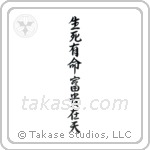
Death and life have their determined appointments - Riches and honors depend upon heaven
生死有命富貴在天
seishi mei ari, fūki ten ni ari
Vertical Semi-Cursive VS6C
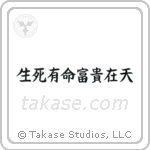
Death and life have their determined appointments - Riches and honors depend upon heaven
生死有命富貴在天
seishi mei ari, fūki ten ni ari
Horizontal Block HB6A
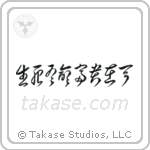
Death and life have their determined appointments - Riches and honors depend upon heaven
生死有命富貴在天
seishi mei ari, fūki ten ni ari
Horizontal Cursive HC5A
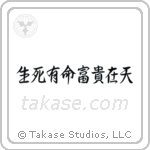
Death and life have their determined appointments - Riches and honors depend upon heaven
生死有命富貴在天
seishi mei ari, fūki ten ni ari
Horizontal Semi-Cursive HS6A
