

Summer grass; the trace of the warriors' dreams.
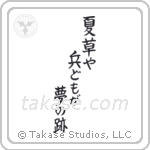
Bashō - Summer grass, all the warriors are, but the remains of dreams
夏草や兵どもが夢の跡
natsukusa ya tsuwamono domo ga yume no ato
Vertical Block VB5C
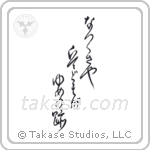
Bashō - Summer grass, all the warriors are, but the remains of dreams
夏草や兵どもが夢の跡
natsukusa ya tsuwamono domo ga yume no ato
Vertical Cursive VC4B
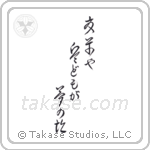
Bashō - Summer grass, all the warriors are, but the remains of dreams
夏草や兵どもが夢の跡
natsukusa ya tsuwamono domo ga yume no ato
Vertical Cursive VC6B
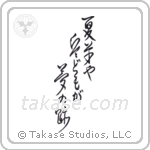
Bashō - Summer grass, all the warriors are, but the remains of dreams
夏草や兵どもが夢の跡
natsukusa ya tsuwamono domo ga yume no ato
Vertical Jiun VD4B
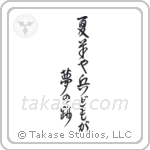
Bashō - Summer grass, all the warriors are, but the remains of dreams
夏草や兵どもが夢の跡
natsukusa ya tsuwamono domo ga yume no ato
Vertical Jiun VD4C
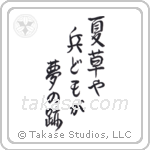
Bashō - Summer grass, all the warriors are, but the remains of dreams
夏草や兵どもが夢の跡
natsukusa ya tsuwamono domo ga yume no ato
Vertical Semi-Cursive VS4C
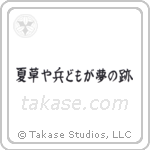
Bashō - Summer grass, all the warriors are, but the remains of dreams
夏草や兵どもが夢の跡
natsukusa ya tsuwamono domo ga yume no ato
Horizontal Block HB4A
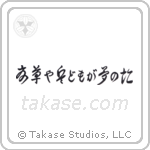
Bashō - Summer grass, all the warriors are, but the remains of dreams
夏草や兵どもが夢の跡
natsukusa ya tsuwamono domo ga yume no ato
Horizontal Cursive HC4A
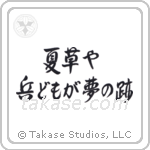
Bashō - Summer grass, all the warriors are, but the remains of dreams
夏草や兵どもが夢の跡
natsukusa ya tsuwamono domo ga yume no ato
Horizontal Semi-Cursive HS3A
