

Always on the battlefield: act always with the readiness of one on a battlefield, the precept a samurai house made the head of its code.
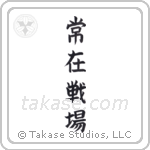
Always on the Battlefield
常在戦場
jōzai senjō
Vertical Block VB4C
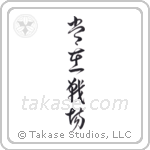
Always on the Battlefield
常在戦場
jōzai senjō
Vertical Cursive VC4B
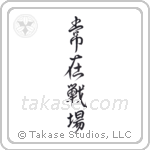
Always on the Battlefield
常在戦場
jōzai senjō
Vertical Jiun VD5B
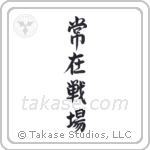
Always on the Battlefield
常在戦場
jōzai senjō
Vertical Semi-Cursive VS4C
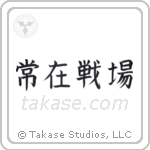
Always on the Battlefield
常在戦場
jōzai senjō
Horizontal Block HB3A
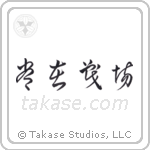
Always on the Battlefield
常在戦場
jōzai senjō
Horizontal Cursive HC3A
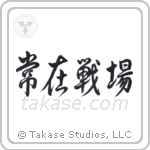
Always on the Battlefield
常在戦場
jōzai senjō
Horizontal Jiun HD3A
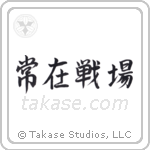
Always on the Battlefield
常在戦場
jōzai senjō
Horizontal Semi-Cursive HS4A
