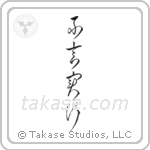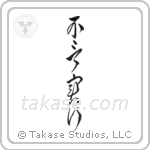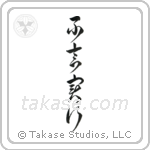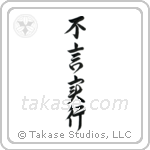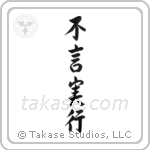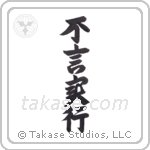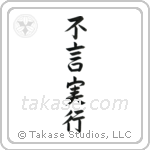

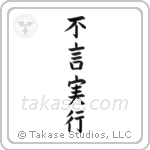
不言実行 (fugen jikkō): to do the thing without announcing it; act first, and let your words follow. 不言 is
not saying and 実行 is
real doing; the two words are Chinese, the four-character word is Japanese, and it is young. It was born as politics. The first Katsura cabinet declared it at its founding in 1901, and the oldest print of it, a year later, is an attack: an oratory society objecting that a government which works in silence has no place in politics that rests on public opinion. Ōkuma Shigenobu, the great talker of the age, sneered at it as a buzzword, the excuse of a man with no opinions. It outlived the mockery. By 1913 a manual for the spiritual education of soldiers taught it to conscripts, a calligraphy copybook carried it, and the county gazetteers praised their local worthies for it; by 1916 it had its pun, 有言実行,
say it and do it, coined in a joke about three prime ministers. Its model is the Analects, which its first users quoted in the same breath: asked what makes a gentleman, Confucius answers
he acts before he speaks, and afterwards speaks according to his actions, which is what
Action Before Words translates. A commentary of 1940 gives the word its best gloss: 不言実行 prizes not the silence but the doing. 不言実行 translates as "Action Before Words; Actions speak louder than words; No talk, all deeds" and is a combination of the words
不言 (read fugen) meaning "Silent" and
実行 (read jikkō) meaning "Action".