

Fine Japanese Calligraphy

The Art of Master Japanese Calligrapher Eri Takase

本来無一物 honrai muichimotsu By Nature, Having Nothing

From the beginning, not one thing.
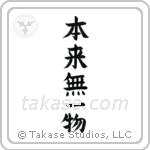
By Nature, Having Nothing (本来無一物) in Block style Japanese calligraphy by Eri Takase
By Nature, Having Nothing 本来無一物 honrai muichimotsu Vertical Block VB6C
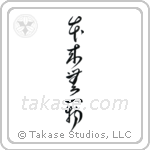
By Nature, Having Nothing (本来無一物) in Cursive style Japanese calligraphy by Eri Takase
By Nature, Having Nothing 本来無一物 honrai muichimotsu Vertical Cursive VC5B
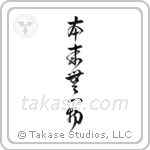
By Nature, Having Nothing (本来無一物) in Cursive style Japanese calligraphy by Eri Takase
By Nature, Having Nothing 本来無一物 honrai muichimotsu Vertical Cursive VC7B
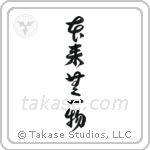
By Nature, Having Nothing (本来無一物) in Jiun style Japanese calligraphy by Eri Takase
By Nature, Having Nothing 本来無一物 honrai muichimotsu Vertical Jiun VD6B
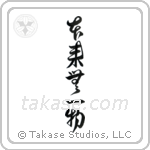
By Nature, Having Nothing (本来無一物) in Jiun style Japanese calligraphy by Eri Takase
By Nature, Having Nothing 本来無一物 honrai muichimotsu Vertical Jiun VD6C
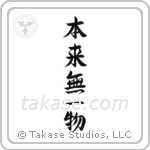
By Nature, Having Nothing (本来無一物) in Semi-Cursive style Japanese calligraphy by Eri Takase
By Nature, Having Nothing 本来無一物 honrai muichimotsu Vertical Semi-Cursive VS6C
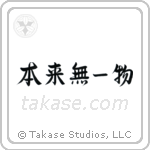
By Nature, Having Nothing (本来無一物) in Semi-Cursive style Japanese calligraphy by Eri Takase
By Nature, Having Nothing 本来無一物 honrai muichimotsu Horizontal Semi-Cursive HS6A
More about 本来無一物

In 本来無一物, 本来 is how things have always stood, not where they came from, and 無一物 means not one thing. In everyday Japanese 無一物 also means having nothing to one's name. The Daijisen and the Nihon Kokugo Daijiten both gloss the five characters: since all things are empty from the beginning, there is not one thing to cling to. The Nihon Kokugo Daijiten adds a mind free of everything. Its readers have had to say what it does not mean: Ōbaku, asked whether it means that nothing exists, answers that nothing is just as wrong, and Tōzan warns that saying it outright is not yet enough. Whether you take it as a teaching or as a reminder to let go is yours.

The line is the third of the verse that, in Chan legend, won the illiterate Huineng 惠能 the Sixth Patriarch's robe; it is absent from the oldest surviving text of the Platform Sutra, a Dunhuang manuscript copied in the ninth century, is quoted in Ōbaku's recorded teaching, whose preface is dated 857, stands in the verse in a Chan history of 952, and has been in the sutra's received text since 1291.

We want you to be as happy with the meaning as you are with Master Takase's art. To learn more, visit Philology of 本来無一物.

About the Designs

Each design is Master Japanese Calligrapher Eri Takase's hand-brushed calligraphy of the word or phrase on this page, delivered as a PDF you can print. Every PDF includes the line art, so a tattoo artist or a craftsperson can work from the outline as well as the brushed image.

Licensing

Your purchase includes a personal-use license: use the design as a tattoo reference, frame it, engrave it, print it for yourself, or make it into a gift. For more information see Licensing, which also covers commercial-use options that may be purchased separately.

Delivery

Your PDF is available for download the moment your order completes, and a copy is attached to your emailed receipt.

If you need your design again later, ask us for it and we will send it.

By Nature, Having Nothing as a hand-brushed scroll

Master Takase personally brushes your scroll when you order, and it bears her red seal and her signature. The scroll has woven damask borders and layered Japanese paper. It is designed to last generations and arrives ready to display.