

The old pond; a frog leaps in: the sound of the water.
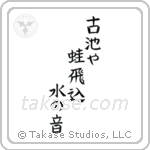
Bashō - The old pond, a frog jumps in, the sound of water
古池や蛙飛込水の音
furu ike ya kawazu tobikomu mizu no oto
Vertical Block VB5C
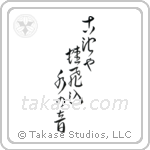
Bashō - The old pond, a frog jumps in, the sound of water
古池や蛙飛込水の音
furu ike ya kawazu tobikomu mizu no oto
Vertical Cursive VC5B
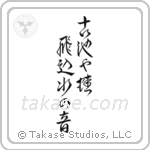
Bashō - The old pond, a frog jumps in, the sound of water
古池や蛙飛込水の音
furu ike ya kawazu tobikomu mizu no oto
Vertical Jiun VD5B
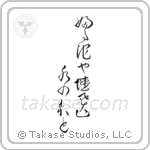
Bashō - The old pond, a frog jumps in, the sound of water
古池や蛙飛込水の音
furu ike ya kawazu tobikomu mizu no oto
Vertical Jiun VD5C
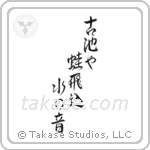
Bashō - The old pond, a frog jumps in, the sound of water
古池や蛙飛込水の音
furu ike ya kawazu tobikomu mizu no oto
Vertical Semi-Cursive VS5C
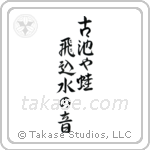
Bashō - The old pond, a frog jumps in, the sound of water
古池や蛙飛込水の音
furu ike ya kawazu tobikomu mizu no oto
Vertical Semi-Cursive VS5D
